


















































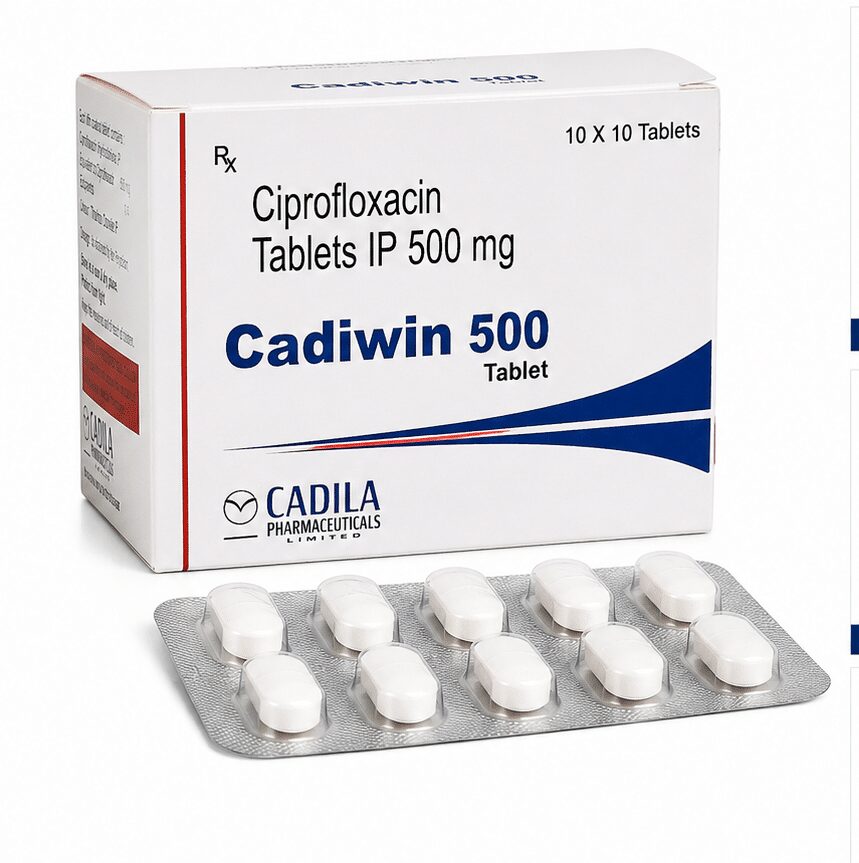
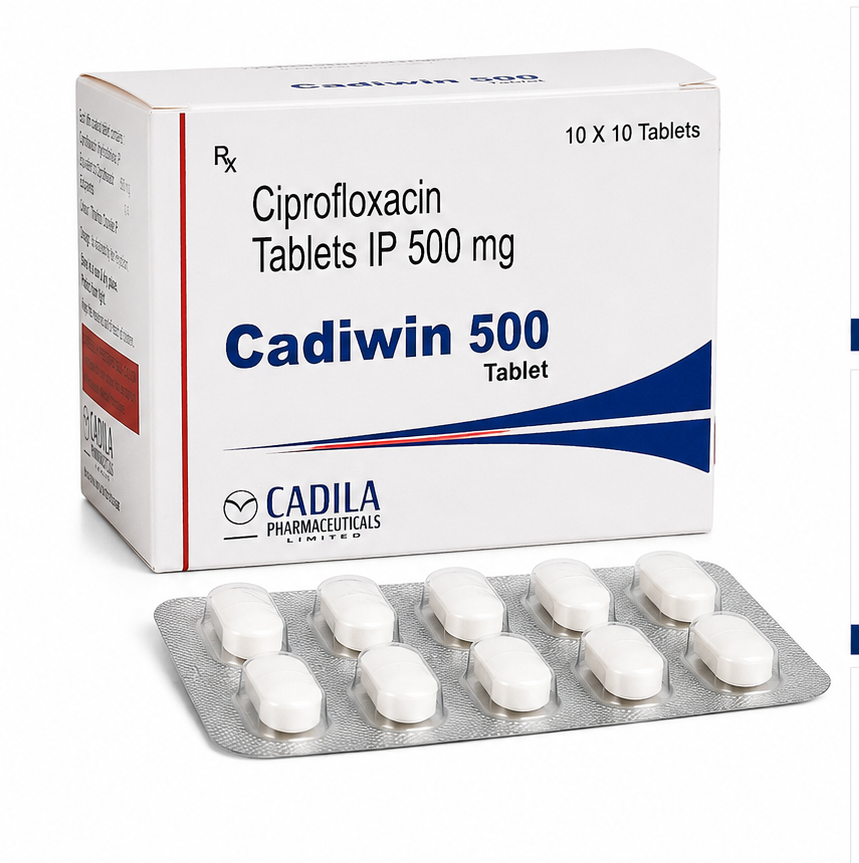


Cadiwin 500 Tablet is an antibiotic medicine containing Ciprofloxacin 500 mg is an antibiotic medicine used to treat certain bacterial infections when prescribed by a healthcare professional. It does not work against viral infections such as the common cold or flu.
Cadiwin 500 Tablet should be used only when prescribed by a doctor. The appropriate dose and treatment duration depend on the type and severity of the infection, your age, kidney function, medical history, and other medicines you may be taking.
Take Cadiwin 500 Tablet exactly as prescribed. Do not change the dose, skip doses unnecessarily, or stop the treatment on your own. Using antibiotics incorrectly can reduce treatment effectiveness and may contribute to antibiotic resistance.
What Is Cadiwin 500 Tablet?
Cadiwin 500 Tablet contains ciprofloxacin 500 mg as its active ingredient. Ciprofloxacin is a fluoroquinolone antibiotic that acts against susceptible bacteria. It works by interfering with bacterial enzymes involved in DNA replication and repair, which prevents susceptible bacteria from multiplying.
Because Cadiwin 500 Tablet is an antibiotic, it should be used for an appropriate bacterial infection based on your doctor’s assessment. It should not be used to treat viral infections such as influenza or the common cold.
Cadiwin 500 Tablet Uses
Cadiwin 500 Tablet may be prescribed for certain bacterial infections that are susceptible to ciprofloxacin. The exact use depends on the type of infection, the bacteria involved, and your doctor’s assessment.
- Used to treat certain susceptible bacterial infections.
- May be prescribed for selected urinary tract infections.
- May be used for certain gastrointestinal bacterial infections when considered appropriate.
- May be prescribed for other susceptible bacterial infections when specifically recommended by a healthcare professional.
Cadiwin 500 Tablet should not be used for viral infections such as the common cold or flu. Your doctor will determine whether ciprofloxacin is suitable for your particular infection.
Benefits of Cadiwin 500 Tablet
- Helps control certain bacterial infections caused by susceptible bacteria.
- Contains ciprofloxacin 500 mg as the active antibiotic ingredient.
- Works by interfering with bacterial DNA replication and repair.
- Helps prevent susceptible bacteria from multiplying.
- May support recovery when used for an appropriate bacterial infection.
- May help infection-related symptoms improve as the underlying bacterial infection comes under control.
The benefits of Cadiwin 500 Tablet depend on whether the bacteria causing the infection are susceptible to ciprofloxacin. Always use this medicine according to your doctor’s prescription.
How Cadiwin 500 Tablet Works
A contains ciprofloxacin, which works by blocking bacterial enzymes called DNA gyrase and topoisomerase IV. These enzymes are important for bacterial DNA replication, repair, and maintenance.
By interfering with these processes, ciprofloxacin prevents susceptible bacteria from multiplying and can lead to the death of bacterial cells. This helps control the bacterial infection and allows the body to recover.
Composition of Cadiwin 500 Tablet
| Ingredient | Strength | Role |
|---|---|---|
| Ciprofloxacin | 500 mg | Active antibiotic ingredient that acts against susceptible bacteria. |
Active Ingredient: Ciprofloxacin 500 mg
The complete list of inactive ingredients may vary according to the manufacturer’s formulation. Refer to the product packaging or package insert for the complete excipient information.
Dosage
The dose and duration of Cadiwin 500 Tablet depend on the type and severity of the bacterial infection, kidney function, age, medical history, and your doctor’s prescription. Do not change the dose or treatment duration on your own.
- Take Cadiwin 500 Tablet exactly as prescribed by your doctor.
- Swallow the tablet whole with a glass of water.
- Do not crush or chew the tablet unless your doctor specifically advises you to do so.
- Cadiwin 500 Tablet can generally be taken with or without food.
- Avoid taking ciprofloxacin at the same time as milk, yogurt, calcium-fortified products, antacids, iron, or zinc supplements because these products can reduce ciprofloxacin absorption.
- Take each dose at the prescribed time and follow the dosing schedule recommended by your doctor.
- Complete the prescribed treatment unless your doctor tells you to stop.
- Do not take more or less than the prescribed dose.
If you have kidney problems, are older, or take multiple medicines, your doctor may need to adjust your treatment or monitor you more closely.
Side Effects of Ciprofloxacin
Like other medicines, Cadiwin 500 Tablet may cause side effects in some people. Many people tolerate ciprofloxacin without serious problems, but some side effects can require medical attention. Contact your doctor if any side effect is severe, persistent, or concerning.
Common Side Effects
- Nausea
- Vomiting
- Diarrhea
- Stomach pain or discomfort
- Indigestion
- Headache
- Dizziness
- Loss of appetite
- Difficulty sleeping
These effects may improve as your body adjusts to the medicine. If they continue, become troublesome, or worsen, speak with your doctor.
Serious Side Effects
Ciprofloxacin can occasionally cause serious or persistent adverse effects. Seek medical attention promptly if you develop any of the following:
- Severe or persistent tendon pain, swelling, or difficulty moving a joint.
- Numbness, tingling, burning, weakness, or unusual changes in sensation.
- Severe or persistent muscle or joint pain.
- Severe skin rash, blistering, peeling, or swelling of the face or throat.
- Difficulty breathing or signs of a serious allergic reaction.
- Severe anxiety, confusion, hallucinations, unusual changes in behaviour, or seizures.
- Fast, irregular, or unusual heartbeat.
- Severe or persistent diarrhea, particularly if it contains blood or mucus.
If you develop sudden tendon pain or swelling, stop exercising the affected area and contact your doctor promptly. Do not restart or continue treatment without medical advice if a serious reaction is suspected.
Precautions and Warnings for Cadiwin 500 Tablet
- Use Cadiwin 500 Tablet only when prescribed by a doctor.
- Do not use this medicine to treat viral infections such as the common cold or flu.
- Tell your doctor if you have kidney disease or other kidney problems before taking ciprofloxacin.
- Inform your doctor if you have a history of seizures or other neurological conditions.
- Tell your doctor if you have previously experienced tendon problems while taking a fluoroquinolone antibiotic.
- Older adults may have a higher risk of tendon-related side effects and may require closer monitoring.
- Stop strenuous physical activity and seek medical advice if you develop tendon pain or swelling.
- Ciprofloxacin may cause dizziness or other nervous-system effects in some people. Avoid driving or operating machinery if you feel dizzy or less alert.
- Ciprofloxacin may increase sensitivity to sunlight in some people. Limit unnecessary exposure to strong sunlight and use protective clothing or sunscreen when appropriate.
- Tell your doctor about all prescription medicines, over-the-counter medicines, vitamins, and supplements you are taking.
- Use Cadiwin 500 Tablet during pregnancy or breastfeeding only after discussing it with your doctor.
Drug Interactions with Cadiwin 500 Tablet
Cadiwin 500 Tablet may interact with certain medicines and supplements. Tell your doctor or pharmacist about everything you currently take before starting ciprofloxacin.
Important Medicines and Products That May Interact
Tizanidine: Ciprofloxacin can significantly increase tizanidine levels and may cause excessive sleepiness, low blood pressure, and other serious effects. These medicines should not be taken together unless specifically directed by a doctor.
Antacids containing aluminium or magnesium: These products can reduce the absorption of ciprofloxacin.
Calcium-containing products: Calcium can affect ciprofloxacin absorption when taken at the same time.
Iron supplements: Iron can reduce ciprofloxacin absorption when taken together.
Zinc supplements: Zinc-containing products may also interfere with ciprofloxacin absorption.
Warfarin and other blood thinners: Ciprofloxacin may affect the action of certain anticoagulant medicines and may require monitoring.
How to Take Ciprofloxacin with Antacids and Mineral Supplements
Ciprofloxacin should generally be taken at least 2 hours before or 6 hours after antacids containing aluminium or magnesium and products containing calcium, iron, or zinc. This spacing helps prevent these products from reducing ciprofloxacin absorption.
Always follow the specific instructions provided by your doctor or pharmacist if they differ from general timing guidance.
Storage Instructions for Cadiwin 500 Tablet
- Store Cadiwin 500 Tablet at room temperature unless the product packaging states otherwise.
- Keep the tablets in their original packaging to protect them from moisture and light.
- Keep the medicine in a dry place.
- Keep it away from excessive heat and direct sunlight.
- Keep the medicine out of the reach and sight of children.
- Do not use tablets that are damaged, discoloured, or past their expiry date.
Missed Dose of Cadiwin 500 Tablet
If you miss a dose of Cadiwin 500 Tablet, take it when you remember unless it is almost time for your next scheduled dose. If the next dose is due soon, skip the missed dose and continue with your regular schedule.
Do not take two doses together to make up for a missed dose. If you frequently forget your doses or are unsure what to do after missing a dose, contact your doctor or pharmacist.
Overdose of Cadiwin 500 Tablet
Taking more Cadiwin 500 Tablet than prescribed may increase the risk of side effects and other complications. Do not take an extra dose unless specifically instructed by your healthcare professional.
If you accidentally take more than the prescribed amount, contact a doctor or seek urgent medical advice, particularly if you develop severe dizziness, vomiting, confusion, seizures, abnormal heartbeat, or other unusual symptoms.
Do not attempt to manage a suspected overdose by taking additional medicines unless advised by a healthcare professional.
How to Take
Take Cadiwin 500 Tablet exactly as prescribed by your doctor. The medicine should be taken at the dose and for the duration recommended for your infection.
- Swallow the tablet whole with a glass of water.
- Take each dose at the prescribed time and try to maintain a consistent schedule.
- Cadiwin 500 Tablet can generally be taken with or without food.
- Do not take it at the same time as milk, yogurt, calcium-fortified drinks, antacids, iron, or zinc supplements.
- Follow the recommended time gap between ciprofloxacin and mineral-containing products.
- Do not crush, chew, or alter the tablet unless your doctor specifically advises you to do so.
- Do not stop the prescribed treatment on your own simply because you start feeling better.
- Do not share your antibiotic with another person.
Important Usage Tips for Cadiwin 500 Tablet
- Use Cadiwin 500 Tablet only for the bacterial infection for which it was prescribed.
- Do not use leftover antibiotics for a future illness without medical advice.
- Tell your doctor about all medicines, vitamins, and supplements you take.
- Maintain the recommended time gap between ciprofloxacin and antacids or mineral supplements.
- Contact your doctor if you develop tendon pain, swelling, numbness, tingling, severe diarrhea, serious skin reactions, or unusual neurological symptoms.
- Avoid driving or operating machinery if the medicine makes you dizzy, confused, or less alert.
- Protect yourself from excessive sunlight if you notice increased sensitivity to sunlight.
- Store the medicine properly and keep it away from children.
Lifestyle Tips During Treatment with Cadiwin 500 Tablet
- Follow a balanced diet and maintain regular meals unless your doctor recommends otherwise.
- Drink adequate fluids unless you have been advised to restrict fluid intake.
- Get adequate rest while recovering from the infection.
- Avoid unnecessary self-medication, especially with other antibiotics.
- Follow good personal hygiene practices to help reduce the spread of bacterial infections.
- Complete the treatment exactly as prescribed rather than stopping it early without medical advice.
- Avoid strenuous exercise if you develop tendon pain or swelling while taking ciprofloxacin.
Important Safety Information
- Take Cadiwin 500 Tablet only according to your doctor’s prescription.
- Do not use this medicine for viral infections such as the common cold or flu.
- Do not change the dose or treatment duration without medical advice.
- Tell your doctor if you have kidney problems, a history of seizures, tendon disorders, or other significant medical conditions.
- Inform your doctor about all medicines and supplements you are currently taking.
- Use during pregnancy or breastfeeding only after discussing the medicine with your doctor.
- Seek medical advice promptly if you experience severe or persistent side effects.
Who Should Use Cadiwin 500 Tablet Carefully?
Cadiwin 500 Tablet may require additional medical consideration in people with certain health conditions or risk factors. Tell your doctor if you have kidney disease, a history of seizures, tendon problems, neurological conditions, heart-rhythm problems, or other significant medical conditions.
Older adults may have a higher risk of certain adverse effects, including tendon-related problems. Your doctor may therefore monitor you more closely during treatment.
Do not start ciprofloxacin without medical advice if you have previously experienced a serious reaction to ciprofloxacin or another fluoroquinolone antibiotic.
Patient Concerns and Guidance
Can I Take Cadiwin 500 Tablet With Food?
Yes, Cadiwin 500 Tablet can generally be taken with or without food. However, avoid taking ciprofloxacin at the same time as milk, yogurt, calcium-fortified products, antacids, iron, or zinc supplements because these products can reduce its absorption. Follow your doctor’s instructions regarding the timing of your doses.
Is Cadiwin 500 Tablet Safe During Pregnancy?
Cadiwin 500 Tablet should be used during pregnancy only when specifically prescribed by a doctor. Tell your doctor if you are pregnant, planning to become pregnant, or breastfeeding before taking ciprofloxacin. Do not start or stop this medicine without medical advice.
Can Cadiwin 500 Tablet Cause Dizziness?
Some people may experience dizziness while taking ciprofloxacin. If you feel dizzy or less alert, avoid driving or operating machinery until you feel better. Contact your doctor if dizziness is severe, persistent, or occurs with other concerning symptoms.
Can I Take Milk or Dairy Products
Milk and other dairy products can affect the absorption of ciprofloxacin when taken at the same time. Avoid taking Cadiwin 500 Tablet together with milk, yogurt, or calcium-fortified products. Follow your doctor or pharmacist’s instructions about the appropriate timing.
Frequently Asked Questions
1. What is Cadiwin 500 Tablet used for?
Cadiwin 500 Tablet contains ciprofloxacin 500 mg and is used to treat certain bacterial infections when the bacteria are susceptible to ciprofloxacin. It should be used only when prescribed by a healthcare professional.
2. What is the composition of Cadiwin 500 Tablet?
The active ingredient in Cadiwin 500 Tablet is ciprofloxacin 500 mg. It belongs to the fluoroquinolone group of antibiotics.
3. Can Cadiwin 500 Tablet treat a common cold or flu?
No. Cadiwin 500 Tablet is an antibiotic and does not treat viral infections such as the common cold or flu.
4. Can I stop Cadiwin 500 Tablet when I feel better?
Do not stop the prescribed treatment on your own. Follow your doctor’s instructions regarding the duration of treatment. If you experience a serious side effect or have concerns about continuing the medicine, contact your doctor.
5. Can Cadiwin 500 Tablet cause diarrhea?
Yes. Diarrhea can occur while taking ciprofloxacin. If diarrhea is severe, persistent, or contains blood or mucus, contact your doctor promptly.
Key Facts About Cadiwin 500 Tablet
- Product Name: Cadiwin 500 Tablet
- Active Ingredient: Ciprofloxacin 500 mg
- Medicine Type: Prescription antibiotic
- Drug Class: Fluoroquinolone antibiotic
- Primary Use: Treatment of certain susceptible bacterial infections
- Dosage Form: Oral tablet
- Route of Administration: Oral
- Effect on Viral Infections: Not effective against viral infections such as the common cold or flu
Important Usage Information
Ciprofloxacin should be used only for an appropriate bacterial infection and according to a healthcare professional’s prescription. The choice of antibiotic depends on the suspected or confirmed bacteria, the type of infection, and the patient’s medical condition.
Take the medicine according to the prescribed schedule and do not change the dose without medical advice. Inform your doctor about your medical history and all prescription medicines, over-the-counter medicines, vitamins, and supplements you currently take.
Pay particular attention to the timing of antacids and mineral supplements because products containing aluminium, magnesium, calcium, iron, or zinc can interfere with ciprofloxacin absorption when taken too close together.
When to Contact Your Doctor
Contact your doctor promptly if your infection does not improve as expected, symptoms become worse, or you develop unusual or severe symptoms during treatment.
- Severe or persistent diarrhea
- Tendon pain, swelling, or difficulty moving a joint
- Numbness, tingling, burning, or unusual weakness
- Severe skin rash, blistering, or swelling
- Difficulty breathing or other signs of a serious allergic reaction
- Confusion, hallucinations, or seizures
- Fast or irregular heartbeat
- Severe or persistent dizziness
Why Use This Antibiotic Only as Prescribed?
Using antibiotics appropriately is important for effective treatment and responsible antibiotic use. Taking ciprofloxacin without medical advice may expose you to unnecessary side effects and may contribute to antibiotic resistance.
Do not use leftover antibiotics for a future illness, do not share your medicine with another person, and do not use this treatment for symptoms that have not been evaluated by a healthcare professional.
Storage and Handling
Keep the tablets in their original packaging and store them according to the conditions mentioned on the product label. Protect the medicine from excessive heat, moisture, and direct sunlight. Keep it out of the reach and sight of children.
Do not use the tablets after the expiry date or if they appear damaged, discoloured, or otherwise unsuitable for use.
Conclusion
Cadiwin 500 Tablet contains ciprofloxacin 500 mg, a fluoroquinolone antibiotic used for certain bacterial infections when the bacteria are susceptible to this medicine. It should be taken only under appropriate medical supervision and according to the prescribed dose and duration.
For safe use, follow your doctor’s instructions carefully, maintain the recommended time gap between ciprofloxacin and mineral-containing products, and report serious or persistent side effects promptly. Do not use this antibiotic for viral infections or share antibiotics with others.
Related Products
If you are looking for other antibacterial medicines, you can explore relevant products available on our website. Always consult a healthcare professional before choosing or changing an antibiotic treatment.
- Cifran OD 1000 mg Tablet – A ciprofloxacin-based antibiotic used for certain bacterial infections.
- Monocef 1 gm Injection – An antibacterial medicine containing ceftriaxone.
Trusted Medical References
For additional information about ciprofloxacin, including its uses, precautions, side effects, and interactions, consult trusted medical resources:
Medical Disclaimer
The information provided on this product page is intended for general educational purposes and should not replace professional medical advice, diagnosis, or treatment. Cadiwin 500 Tablet should be used only according to the prescription and guidance of a qualified healthcare professional.
Do not start, stop, or change antibiotic treatment without consulting your doctor. If you experience a serious or unexpected reaction, seek appropriate medical attention promptly.