


















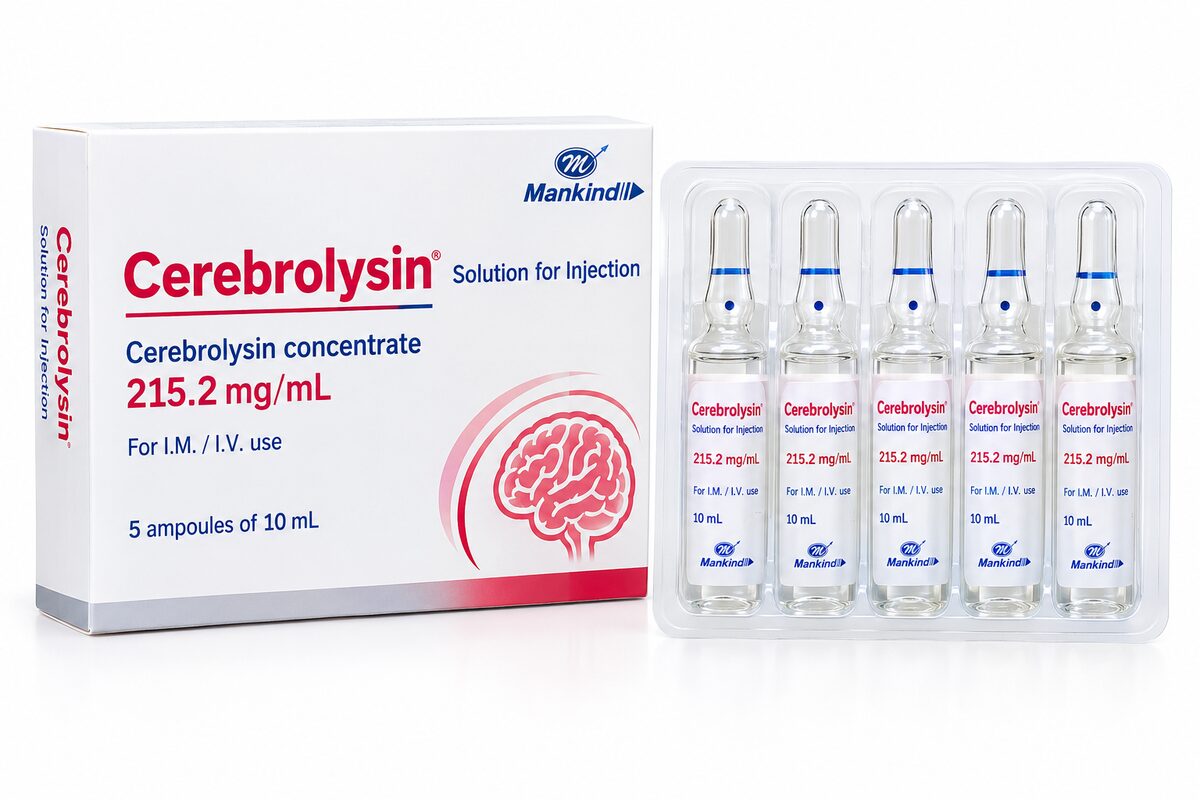
Cerebrolysin Solution for Injection 10ml contains Cerebrolysin concentrate 215.2 mg/mL. It is a prescription injectable medicine used under medical supervision for selected neurological conditions.
Cerebrolysin is a complex preparation of peptides derived from porcine brain tissue. Official product information describes its use in selected cerebrovascular disorders, including stroke, traumatic brain injury and certain forms of dementia. However, approved uses can vary by country and product registration.
Therefore, patients should use this medicine only according to the prescribing information applicable to their country and the advice of a qualified healthcare professional.
Composition and Product Information
- Product: Cerebrolysin Solution for Injection
- Active ingredient: Cerebrolysin concentrate
- Strength: 215.2 mg/mL
- Volume: 10 mL per ampoule
- Pack size: 5 ampoules
- Dosage form: Solution for injection
- Route: Intravenous or intramuscular, depending on the prescribed dose and indication
- Prescription: Required
The current product information confirms that each mL contains 215.2 mg of Cerebrolysin concentrate. A 10 mL ampoule therefore contains 2,152 mg of Cerebrolysin concentrate.
Uses of Cerebrolysin
Healthcare professionals may use Cerebrolysin as part of treatment plans for selected neurological disorders. Official prescribing information includes:
- Stroke and selected cerebrovascular disorders
- Traumatic brain injury
- Vascular dementia
- Alzheimer’s disease in applicable prescribing settings
In addition, some neurological treatment plans may combine the medicine with rehabilitation and supportive care. The exact indication depends on the patient’s diagnosis and local prescribing guidance.
How Cerebrolysin May Work
Cerebrolysin contains a mixture of low-molecular-weight peptides. The manufacturer describes a multimodal action involving neurotrophic and other signalling pathways that may support neuronal function and repair processes.
However, the medicine should not be viewed as a guaranteed way to restore brain function. Doctors decide whether its potential benefits are appropriate for an individual patient.
Potential Benefits
- May form part of treatment after certain neurological events.
- May support neurological recovery programs when prescribed appropriately.
- Can be used alongside rehabilitation in selected patients.
- Provides a parenteral route when a doctor considers injectable treatment appropriate.
These benefits depend on the underlying condition, timing of treatment, overall health and the patient’s complete treatment plan.
Who May Receive This Medicine?
A neurologist or another qualified healthcare professional may consider Cerebrolysin for an appropriate patient after assessing the diagnosis, medical history, kidney function, allergies and other medicines.
Because this is a prescription injection, patients should not purchase or use it for self-treatment.
How Cerebrolysin Injection Is Given
Cerebrolysin Solution for Injection should be administered by a qualified healthcare professional. The prescribed route and dose depend on the medical condition and treatment plan.
Official product information describes slow intravenous injection, intramuscular injection for appropriate smaller volumes, and intravenous infusion for larger prescribed volumes. The healthcare professional will select the appropriate method.
Dosage and Treatment Duration
The dose of Cerebrolysin varies according to the condition being treated. For example, the manufacturer’s dosage information describes different treatment ranges for stroke, traumatic brain injury and dementia-related conditions.
Some official prescribing information describes daily doses of 20–50 mL for stroke or traumatic brain injury and 10–30 mL for certain dementia-related indications. These figures are not a universal prescription for every patient. The treating specialist must determine the actual dose and duration.
Therefore, patients should never calculate or change their injection dose without medical advice.
Possible Side Effects
Some patients may experience unwanted effects during treatment. Reported or possible reactions can include:
- Dizziness
- Headache
- Sweating
- Nausea
- Feeling hot
- Agitation or restlessness
- Injection-site reactions
- Changes in blood pressure or heart rate
However, side effects can vary between patients. Tell your healthcare professional if any reaction becomes severe, persistent or unusual.
Important Precautions
- Tell your doctor about any allergy to Cerebrolysin or its ingredients.
- Inform your doctor if you have epilepsy or a history of seizures.
- Tell your healthcare professional if you have severe kidney impairment.
- Provide a complete list of medicines and supplements you use.
- Do not self-administer this injection.
- Follow the prescribed route and infusion or injection rate.
- Use the medicine only for the condition diagnosed by your healthcare professional.
Who Should Avoid Cerebrolysin?
Official prescribing information lists hypersensitivity to the components, epilepsy and severe renal impairment among contraindications. Your doctor should review your medical history before treatment.
Cerebrolysin and Other Medicines
Tell your doctor about all prescription medicines, over-the-counter products and supplements you take. The official product information provides specific precautions regarding interactions and incompatibilities.
For example, Cerebrolysin should not be mixed with certain medicines or solutions unless the product instructions specifically permit the combination. The healthcare professional should prepare and administer the injection correctly.
Pregnancy and Breastfeeding
If you are pregnant, planning pregnancy or breastfeeding, inform your doctor before treatment. Your healthcare professional will decide whether the potential benefit justifies use.
Missed Dose
Cerebrolysin is administered under medical supervision. If you miss a scheduled treatment, contact your treating healthcare professional. Do not arrange an additional injection yourself.
Overdose
An excessive dose may increase the risk of unwanted effects. If an overdose or administration error occurs, seek immediate medical attention.
Storage
Store Cerebrolysin according to the current package instructions and protect the ampoules from unsuitable temperatures and light. Do not use an ampoule after its expiry date.
After opening an ampoule, the solution should be handled and used according to the manufacturer’s instructions. A healthcare professional should manage preparation and administration.
Frequently Asked Questions
1. What is Cerebrolysin Solution for Injection 10ml?
It is a prescription injectable medicine containing Cerebrolysin concentrate 215.2 mg/mL and is used for selected neurological conditions.
2. What is the strength of Cerebrolysin?
Each mL contains 215.2 mg of Cerebrolysin concentrate.
3. How much Cerebrolysin is present in a 10ml ampoule?
A 10 mL ampoule contains 2,152 mg of Cerebrolysin concentrate based on the 215.2 mg/mL strength.
4. What is the pack size?
The product requested here contains 5 ampoules of 10 mL each.
5. What is Cerebrolysin used for?
Official product information lists selected cerebrovascular disorders, stroke, traumatic brain injury and certain dementia-related conditions.
Important Safety Information
Cerebrolysin Solution for Injection 10ml is a prescription medicine. Use it only under the supervision of a qualified healthcare professional.
Tell your doctor about allergies, epilepsy, kidney disease, pregnancy, breastfeeding and all medicines you take. Seek medical attention if you develop a serious or unexpected reaction during treatment.
Always follow the locally approved prescribing information because indications, dosing recommendations and administration instructions can vary between countries.
Related Neurology Information
For more medicine and health information, visit our Home Page, Medicine Shop and Health Blog.
You can also explore relevant products through the appropriate Neurology Medicines category if this category is available on your website.
Conclusion
Cerebrolysin Solution for Injection 10ml contains Cerebrolysin concentrate 215.2 mg/mL and is used under medical supervision for selected neurological conditions. Treatment may form part of a broader care plan that includes rehabilitation and supportive management.
Because the dose and administration method depend on the patient’s condition, a specialist should decide the treatment plan. Do not self-inject or change the prescribed dose without medical advice.