























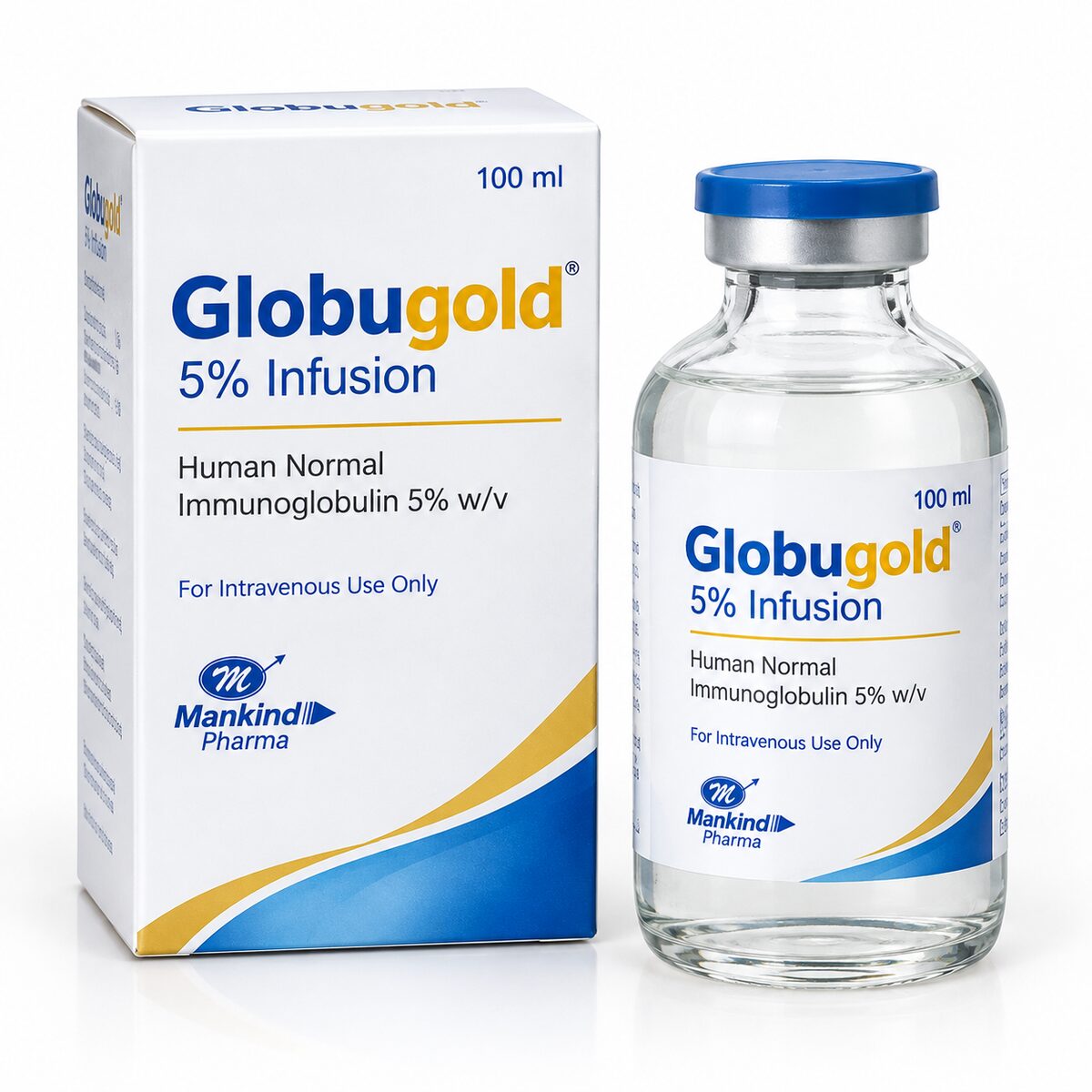
Globugold 5% Infusion: Overview
Globugold 5% Infusion is a prescription immunoglobulin medicine used to provide antibodies when the body does not have enough protective immunoglobulins. It contains Human Normal Immunoglobulin 5% w/v and is supplied in a 100 ml pack.
Doctors may also use this treatment for certain immune-related and inflammatory conditions. The treatment plan depends on the patient’s medical condition, antibody levels, response to therapy and the reason for treatment.
This is a prescription medicine. A qualified healthcare professional should decide whether it is suitable and should administer or supervise its use according to the prescribed instructions.
Composition and Strength
The active ingredient in this medicine is:
- Human Normal Immunoglobulin 5% w/v
Immunoglobulins are antibodies that play an important role in the body’s immune defence. This treatment provides human antibodies to support patients who have an immunoglobulin deficiency or who need immunoglobulin therapy for a specific medical condition.
What Is This Immunoglobulin Medicine Used For?
Doctors may prescribe this treatment for immunoglobulin deficiency and selected inflammatory or immune-related disorders.
Depending on the clinical situation, it may be used for conditions such as:
- Primary immunodeficiency diseases
- Secondary immunodeficiency in selected patients
- Primary immune thrombocytopenia (ITP)
- Guillain-Barré syndrome
- Kawasaki disease
- Chronic inflammatory demyelinating polyneuropathy (CIDP)
- Multifocal motor neuropathy (MMN)
The exact indication depends on the patient’s condition and the treatment plan made by the doctor. Immunoglobulin products can have different approved uses, so patients should use the specific product only as prescribed.
How Human Immunoglobulin Works
Human normal immunoglobulin supplies antibodies that support the body’s immune system. These antibodies can help people whose bodies do not produce enough protective immunoglobulins.
In some immune-related conditions, immunoglobulin therapy can also change abnormal immune activity. This may help reduce inflammation or control immune responses involved in certain disorders.
The exact way immunoglobulin produces its effects can vary according to the condition being treated.
Key Benefits of the Treatment
- Provides human antibodies to the body.
- Helps replace deficient immunoglobulins in suitable patients.
- Supports immune protection in selected immunodeficiency conditions.
- May help manage certain immune-mediated inflammatory disorders.
- Can be used under specialist medical supervision for approved indications.
Who May Receive This Treatment?
This medicine is intended for patients who have a medical reason to receive immunoglobulin therapy. A doctor may review the patient’s medical history, immune status, kidney function, risk of blood clots and previous reactions before treatment.
Patients should not use immunoglobulin products without a prescription or medical supervision.
Dosage and Administration
The appropriate dose depends on the medical condition, body weight, treatment goal and response to therapy. Therefore, there is no single dose that is suitable for every patient.
Your doctor will decide the amount, treatment schedule and duration. The medicine should be prepared and administered according to the product instructions and under appropriate medical supervision.
Do not change the dose or infusion schedule yourself. Your healthcare team may monitor you during treatment, especially when you receive immunoglobulin for the first time or have risk factors for complications.
How to Use the Infusion
- Use the medicine only on a doctor’s prescription.
- Allow a trained healthcare professional to administer the treatment.
- Follow the prescribed dose and treatment schedule.
- Do not change the infusion rate without medical advice.
- Tell the healthcare professional if you feel unwell during treatment.
The product should also be checked before administration. Do not use a preparation if it appears unsuitable, damaged, cloudy or contains unexpected particles. Follow the product-specific instructions provided by the healthcare team.
Common Side Effects
Some patients may experience side effects during or after immunoglobulin treatment. Possible effects can include:
- Headache
- Feeling tired
- Dizziness
- Nausea
- Vomiting
- Diarrhea
- Injection or infusion site discomfort
- Fever
- Body aches
- Flu-like symptoms
Mild reactions may improve with time. However, tell your healthcare professional if symptoms continue, become severe or interfere with daily activities.
Serious Side Effects and Warning Signs
Immunoglobulin therapy can rarely cause serious complications. Seek urgent medical attention if you develop symptoms such as:
- Sudden chest pain or difficulty breathing
- Pain, swelling or warmth in an arm or leg
- Sudden weakness or numbness
- Severe headache with unusual symptoms
- Marked reduction in urine output
- Sudden swelling of the face, hands, feet or legs
- Severe allergic reaction
Human immunoglobulin products can increase the risk of blood clots and kidney problems in some patients. Tell your doctor about any history of clotting problems or kidney disease before treatment. :contentReference[oaicite:2]{index=2}
Important Precautions
Before receiving this treatment, tell your doctor if you have ever had an allergic reaction to human immunoglobulin or any ingredient in the product.
Also inform your healthcare provider if you have:
- Kidney disease
- A history of blood clots
- Heart or blood vessel problems
- Diabetes
- High blood pressure
- Problems affecting blood clotting
- IgA deficiency with a history of allergic reactions
Your doctor may monitor your health and laboratory results during treatment. People with certain risk factors may require closer observation. :contentReference[oaicite:3]{index=3}
Drug Interactions
Tell your doctor about all prescription medicines, over-the-counter products, vitamins and supplements that you use.
Some medicines or medical conditions may increase the risk of kidney problems or blood clots. Your healthcare professional will review your medicines before treatment.
Immunoglobulin treatment can also affect the response to some live vaccines. Always tell your doctor about recent or planned vaccinations. :contentReference[oaicite:4]{index=4}
Vaccines and Immunoglobulin Treatment
Immunoglobulin therapy may reduce the effectiveness of certain live vaccines, including vaccines such as measles, mumps and rubella.
Do not receive a live vaccine during or after treatment without first asking your doctor about the appropriate timing. :contentReference[oaicite:5]{index=5}
Use During Pregnancy
Tell your doctor if you are pregnant, planning pregnancy or think that you may be pregnant.
Your healthcare professional will assess your medical condition and decide whether immunoglobulin treatment is appropriate for you.
Use During Breastfeeding
If you are breastfeeding, inform your doctor before receiving treatment. Your healthcare professional can assess the benefits and risks based on your individual condition.
Kidney Health
Patients with kidney disease should use immunoglobulin therapy with particular medical supervision. Kidney problems can occur with some immunoglobulin products, especially in people who already have kidney risk factors.
Tell your doctor if you have reduced kidney function, diabetes or any previous kidney problem. Your healthcare team may monitor kidney function during treatment. :contentReference[oaicite:6]{index=6}
What If a Dose Is Missed?
Immunoglobulin treatment is usually given according to a planned medical schedule. If you miss a scheduled appointment, contact your doctor or treatment centre as soon as possible.
Do not receive an extra amount to compensate for a missed treatment unless your healthcare professional specifically advises you to do so.
What Happens in Case of an Overdose?
The dose is selected by a healthcare professional according to the patient’s condition. Receiving an inappropriate amount may increase the risk of side effects or complications.
If you believe that you have received too much medicine, tell your healthcare professional immediately so that appropriate monitoring can be provided.
Storage Instructions
Store the product according to the instructions printed on the package and provided by the manufacturer or healthcare professional.
Current Apollo information advises storage at 2°C to 8°C and protection from unsuitable temperature conditions. Another pharmacy listing provides different storage wording, so the product’s own label and handling instructions should take priority. :contentReference[oaicite:7]{index=7}
Do not freeze the product unless the product information specifically allows it. Keep it away from children and use only a properly stored preparation.
Important Safety Tips
- Use the medicine only under medical supervision.
- Tell your doctor about kidney disease before treatment.
- Inform your doctor about previous blood clots.
- Tell your healthcare team about IgA deficiency and previous allergic reactions.
- Inform your doctor about all medicines and supplements you use.
- Discuss vaccination timing with your doctor.
- Report breathing difficulty, chest pain, severe headache or unusual swelling immediately.
- Attend scheduled follow-up and laboratory appointments when advised.
Frequently Asked Questions
What is Globugold 5% Infusion?
It is a prescription immunoglobulin medicine containing Human Normal Immunoglobulin 5% w/v. Doctors use it for immunoglobulin deficiency and selected immune-related inflammatory conditions.
What is the active ingredient?
The active ingredient is Human Normal Immunoglobulin 5% w/v.
What is the pack size?
The listed product is supplied as a 100 ml infusion. :contentReference[oaicite:8]{index=8}
Who manufactures Globugold 5% Infusion?
Current pharmacy information lists Mankind Pharma Pvt Ltd as the manufacturer or marketer. :contentReference[oaicite:9]{index=9}
What conditions can this treatment help manage?
Doctors may use it for immunoglobulin deficiency and selected conditions such as ITP, Guillain-Barré syndrome, Kawasaki disease, CIDP and multifocal motor neuropathy. The exact use depends on the doctor’s assessment.
What should I do if I feel unwell during the infusion?
Tell the healthcare professional immediately. Do not ignore symptoms such as breathing difficulty, severe headache, chest pain, swelling or a severe allergic reaction.
Does this medicine treat every infection?
No. Immunoglobulin therapy is not a general antibiotic treatment. It provides antibodies and is used for specific medical conditions under professional guidance.
Is Globugold 5% Infusion a prescription medicine?
Yes. Current pharmacy information lists it as a prescription medicine. :contentReference[oaicite:13]{index=13}
Conclusion
Globugold 5% Infusion contains Human Normal Immunoglobulin 5% w/v and provides antibodies for patients who need immunoglobulin therapy. Doctors may use it for immunoglobulin deficiency and selected immune-related inflammatory disorders.
Because immunoglobulin treatment can cause important reactions, patients should receive it under appropriate medical supervision. Tell your doctor about kidney problems, blood-clotting history, allergies, IgA deficiency and all medicines you use.
Always follow the prescribed treatment schedule and report unusual or serious symptoms promptly.
Useful Internal Links
Trusted External References
MedlinePlus – Immune Globulin Information
Apollo Pharmacy – Globugold 5% Infusion
Medical Disclaimer
This article is for general educational purposes only. It does not replace advice from a doctor, pharmacist or other qualified healthcare professional. Globugold 5% Infusion is a prescription medicine and should be used only according to appropriate medical advice.