






























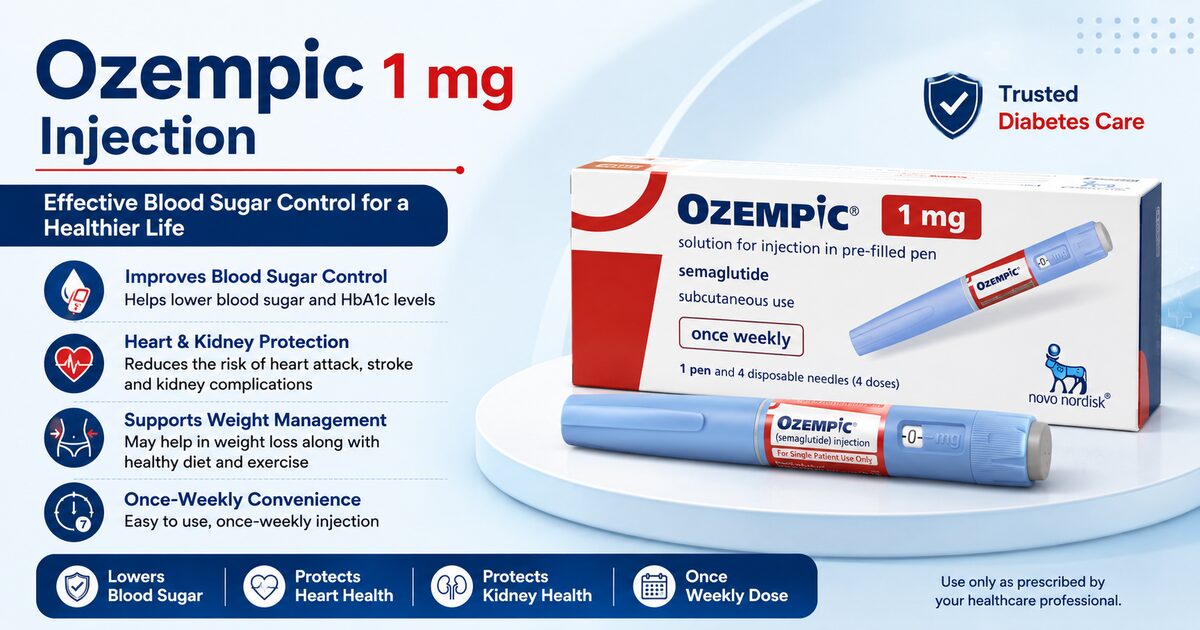

Ozempic 1mg Injection contains Semaglutide, a GLP-1 receptor agonist used to help improve blood sugar control in adults with Type 2 Diabetes Mellitus. It is prescribed along with a healthy diet, regular physical activity, and other diabetes treatments when required.
Semaglutide works in a similar way to the naturally occurring GLP-1 hormone. It helps the body release insulin when blood glucose levels are high, reduces unnecessary glucose production by the liver, and may slow stomach emptying.
This medicine is supplied as a pre-filled injection pen and is generally administered once weekly according to the healthcare professional’s instructions. The prescribed dose and treatment schedule should always be followed carefully.
Do not start, stop, or change the dose without medical advice. Before treatment, discuss your medical history, current medicines, allergies, and existing health conditions with your doctor.
Composition of Ozempic 1mg Injection
The active ingredient in this medicine is:
- Semaglutide – 1 mg per dose
Semaglutide belongs to the GLP-1 receptor agonist class. It mimics the action of GLP-1, a hormone involved in blood glucose regulation, insulin secretion, digestion, and appetite control.
Role of Semaglutide in Blood Sugar Control
- Helps increase insulin secretion when blood glucose levels are elevated.
- Helps reduce excessive glucose production by the liver.
- May slow stomach emptying and support appetite regulation.
- Supports improved blood glucose management in adults with Type 2 Diabetes.
Uses of Semaglutide Injection
Blood Sugar Management in Type 2 Diabetes
The primary use of this treatment is to improve blood glucose control in adults with Type 2 Diabetes Mellitus. It is used together with appropriate diet, exercise, and other diabetes treatments when prescribed by a healthcare professional.
Semaglutide helps improve the body’s natural response to blood glucose changes and can support better diabetes management as part of an overall treatment plan.
Support for Better Glycemic Control
This GLP-1 medicine helps lower elevated blood glucose by enhancing insulin activity when glucose levels rise. The effect may support better blood sugar management when combined with healthy lifestyle habits.
Use Alongside Other Diabetes Medicines
A healthcare professional may prescribe this treatment with other glucose-lowering medicines, such as metformin, depending on the patient’s individual condition and treatment needs.
Appetite and Weight Management Effects
Semaglutide can affect appetite and food intake in some patients. However, this medicine should be used only for the medical purpose prescribed by a qualified healthcare professional.
Cardiovascular Risk Considerations
For some adults with Type 2 Diabetes and cardiovascular risk factors, Semaglutide-based treatment may form part of a broader diabetes management plan determined by a doctor.
Key Benefits of Semaglutide Treatment
When used as prescribed, Semaglutide can provide several benefits for eligible adults managing Type 2 Diabetes. Its effects are related to improved glucose regulation and the actions of the GLP-1 hormone pathway.
- Supports improved blood glucose control.
- Helps improve glucose-dependent insulin response.
- Helps reduce excessive glucose production by the liver.
- May help regulate appetite in some patients.
- Offers a convenient once-weekly dosing schedule when prescribed.
- Can be combined with healthy diet and regular physical activity.
How Semaglutide Works
Semaglutide is a GLP-1 receptor agonist that mimics the activity of the naturally occurring GLP-1 hormone. It works through several actions that help regulate blood glucose.
Supports Insulin Release
When blood glucose levels rise, Semaglutide helps the pancreas release insulin. Insulin helps glucose move from the bloodstream into cells where it can be used for energy.
Helps Reduce Glucagon Release
This medicine can reduce the release of glucagon, a hormone involved in increasing blood glucose. Lower glucagon activity may help reduce unnecessary glucose production by the liver.
May Slow Stomach Emptying
Semaglutide may slow the movement of food from the stomach into the intestine. This can influence the rise in blood glucose after meals and may also contribute to appetite regulation.
Supports Overall Glucose Regulation
Through these combined effects, Semaglutide can support improved blood glucose regulation in adults with Type 2 Diabetes when used according to medical advice.
Semaglutide Dosage Guidelines
The appropriate dose should be decided by a qualified healthcare professional based on the patient’s medical condition, blood glucose levels, treatment response, and other medicines being used.
Recommended Dose Schedule
- Treatment is generally started with a lower dose to help the body adjust.
- The dose may be increased gradually according to the doctor’s recommendation.
- The medicine is generally administered once weekly when prescribed.
- Taking the injection on the same day each week can help maintain a consistent routine.
Do not increase, decrease, or stop the prescribed dose without consulting your doctor. Any dosage change should be made under appropriate medical supervision.
How to Use Semaglutide Injection
Steps for Using the Injection Pen
- Wash your hands before preparing the injection.
- Check the injection pen and make sure the medicine appears clear and suitable for use.
- Select the prescribed dose according to your healthcare provider’s instructions.
- Inject the medicine under the skin (subcutaneously) in the abdomen, thigh, or upper arm.
- Change the injection site regularly to help prevent skin irritation.
- Dispose of used needles safely according to medical guidance.
Do not inject the medicine into a vein or muscle. Always follow the instructions supplied with the injection pen and the guidance provided by your healthcare professional.
Important Usage Tips
- Use the medicine exactly as prescribed by your doctor.
- Follow a balanced eating plan during treatment.
- Maintain regular physical activity as recommended by your healthcare provider.
- Monitor your blood glucose levels as advised.
- Tell your doctor about all prescription medicines, over-the-counter products, vitamins, and supplements you use.
- Never share your injection pen with another person.
- Use a new needle for every injection.
Lifestyle Tips for Better Diabetes Management
Medication works best as part of a complete diabetes management plan. Healthy eating, regular activity, adequate hydration, and routine blood glucose monitoring can support overall treatment goals.
Maintain a Balanced Diet
Choose foods containing vegetables, fibre, lean proteins, and healthy carbohydrates. Limit excessive sugary foods and highly processed foods that may make blood glucose management more difficult.
Exercise Regularly
Activities such as walking, cycling, or other doctor-approved exercises may help improve insulin sensitivity and support better glucose control.
Stay Hydrated
Drink adequate water throughout the day unless your healthcare provider has advised you to restrict fluids. Good hydration supports normal body functions.
Monitor Blood Glucose
Regular glucose monitoring can help you and your healthcare provider understand how your treatment plan is working and whether any adjustments are required.
Maintain a Healthy Body Weight
A balanced diet and regular physical activity can support healthy weight management and contribute to better overall diabetes care.
Side Effects of Semaglutide Treatment
Some patients may experience side effects during treatment, particularly when starting therapy or when the dose is increased. Many common effects are temporary, but persistent or severe symptoms should be discussed with a healthcare professional.
Common Side Effects
- Nausea
- Vomiting
- Diarrhoea
- Constipation
- Stomach pain or abdominal discomfort
- Reduced appetite
- Indigestion
- Bloating
- Injection-site redness or irritation
- Feeling tired or weak
Digestive Side Effects
Because Semaglutide can affect stomach emptying, some people may experience nausea, vomiting, constipation, or changes in bowel habits. These effects may be more noticeable when treatment begins or following a dose increase.
Serious Side Effects
Serious reactions are uncommon but may require prompt medical attention. Seek medical help if you experience severe or persistent symptoms.
- Severe stomach pain that may spread toward the back
- Symptoms suggestive of pancreatitis
- Severe allergic reactions
- Signs of dehydration caused by persistent vomiting or diarrhoea
- Changes in vision, particularly in people with diabetes-related eye problems
- Symptoms of low blood sugar when used with insulin or certain other diabetes medicines
Precautions and Warnings
Before starting treatment, tell your healthcare provider about your complete medical history, allergies, and all medicines you currently take. Appropriate precautions can help reduce the risk of unwanted effects.
History of Pancreatitis
If you have previously experienced pancreatitis, inform your healthcare provider. Your doctor can determine whether this treatment is appropriate for you.
Diabetic Eye Disease
Patients with diabetic retinopathy or other existing eye complications should tell their doctor. Changes in blood glucose levels may affect certain diabetes-related eye conditions.
Kidney Problems
People with kidney problems should use this treatment under medical supervision. Particular care may be required if vomiting or diarrhoea causes dehydration.
Pregnancy and Breastfeeding
If you are pregnant, planning to become pregnant, or breastfeeding, consult your healthcare provider before using this medicine. Your doctor will determine the most appropriate treatment option.
Alcohol Consumption
Excessive alcohol consumption can affect blood glucose levels and may increase the risk of complications. Discuss alcohol use with your doctor as part of your diabetes treatment plan.
Drug Interactions with Semaglutide
This medicine may interact with certain medicines or affect how some treatments are used together. Inform your doctor about all prescription medicines, over-the-counter products, vitamins, and supplements you are taking.
Insulin and Other Diabetes Medicines
When Semaglutide is used with insulin or certain medicines that increase insulin production, the risk of low blood sugar may increase. Your healthcare provider may adjust the doses when necessary.
Medicines Affecting Digestion
Because this treatment may slow stomach emptying, it can potentially affect the absorption of some oral medicines. Tell your doctor about all oral medicines you use.
Other Prescription Medicines
Some medicines may require additional monitoring when used alongside Semaglutide. Do not start, stop, or change any medicine without professional medical advice.
Storage Instructions
- Store the medicine according to the instructions provided on the product packaging.
- Keep an unused injection pen refrigerated as directed.
- Do not freeze the medicine.
- Protect the injection pen from direct sunlight and excessive heat.
- Keep the medicine out of reach of children and pets.
- Do not use the product if the pen appears damaged or the medicine does not look suitable for use.
Missed Dose Instructions
If you miss your scheduled dose, follow the instructions provided by your healthcare professional. The timing for taking a missed dose depends on how long it has been since the scheduled dose.
- Do not take two doses together to make up for a missed dose.
- Follow the recommended weekly schedule after taking the missed dose.
- Contact your healthcare provider if you are unsure when to take your next dose.
Overdose and Safety Information
Using more than the prescribed amount may increase the risk of side effects such as severe nausea, vomiting, stomach discomfort, or low blood sugar, particularly when used with certain other diabetes medicines.
If an overdose is suspected, seek prompt medical assistance. Do not make dosage changes without consulting a healthcare professional.
Safety Advice for Semaglutide Treatment
| Category | Safety Advice |
|---|---|
| Kidney | Use under medical supervision if you have kidney problems, especially if dehydration occurs. |
| Liver | Inform your doctor about any liver-related conditions before treatment. |
| Pregnancy | Consult your doctor before using this medicine during pregnancy or if you are planning pregnancy. |
| Breastfeeding | Seek medical advice before using the medicine while breastfeeding. |
| Alcohol | Avoid excessive alcohol consumption and follow your doctor’s advice about blood glucose monitoring. |
| Driving | Use caution when driving if you experience symptoms of low blood sugar, dizziness, or weakness. |
Who Should Avoid This Medicine?
This treatment may not be suitable for everyone. Speak with your doctor before use if any of the following apply to you:
- Allergy to Semaglutide or any ingredient in the medicine.
- History of certain thyroid cancer conditions.
- History of severe allergic reactions to similar medicines.
- Severe digestive problems unless specifically approved by a doctor.
- Pregnancy unless treatment has been specifically recommended by a healthcare professional.
- Children unless prescribed by an appropriate specialist.
Important Safety Points
- Use the medicine only as prescribed by a qualified healthcare professional.
- Never share your injection pen with another person.
- Follow the recommended dosing schedule carefully.
- Monitor blood glucose levels as advised.
- Report unusual or severe symptoms to your healthcare provider.
- Continue healthy eating and regular physical activity as recommended.
-
Frequently Asked Questions
1. What is Ozempic 1mg Injection?
Ozempic 1mg Injection contains Semaglutide, a GLP-1 receptor agonist used with diet and exercise to help improve blood sugar control in adults with Type 2 Diabetes Mellitus.
2. What is Ozempic 1mg Injection used for?
It is mainly used to help manage Type 2 Diabetes by improving blood glucose control. It works by supporting insulin release, reducing glucagon activity, and slowing stomach emptying.
3. How does Semaglutide work?
Semaglutide mimics the action of the natural GLP-1 hormone. It helps the body release insulin when blood glucose is elevated and reduces excessive glucose production by the liver.
4. How often is this medicine administered?
It is generally administered once weekly when prescribed by a healthcare professional. Follow the exact dosing schedule recommended by your doctor.
5. Can this medicine affect appetite?
Semaglutide may affect appetite and food intake in some patients. However, it should be used only for the medical purpose prescribed by a healthcare professional.
Conclusion
Ozempic 1mg Injection contains Semaglutide, a GLP-1 receptor agonist that helps improve blood glucose control in adults with Type 2 Diabetes Mellitus. It supports glucose-dependent insulin release, helps reduce excessive glucose production, and may influence appetite and stomach emptying.
For safe use, follow the prescribed dose and administration schedule provided by your healthcare professional. A balanced diet, regular physical activity, and appropriate blood glucose monitoring can also support diabetes management.
Before starting, stopping, or changing treatment, consult your doctor to determine whether this medicine is appropriate for your medical condition and treatment needs.
Working Internal Links
Explore related healthcare products and diabetes care resources:
Working Outbound Links