































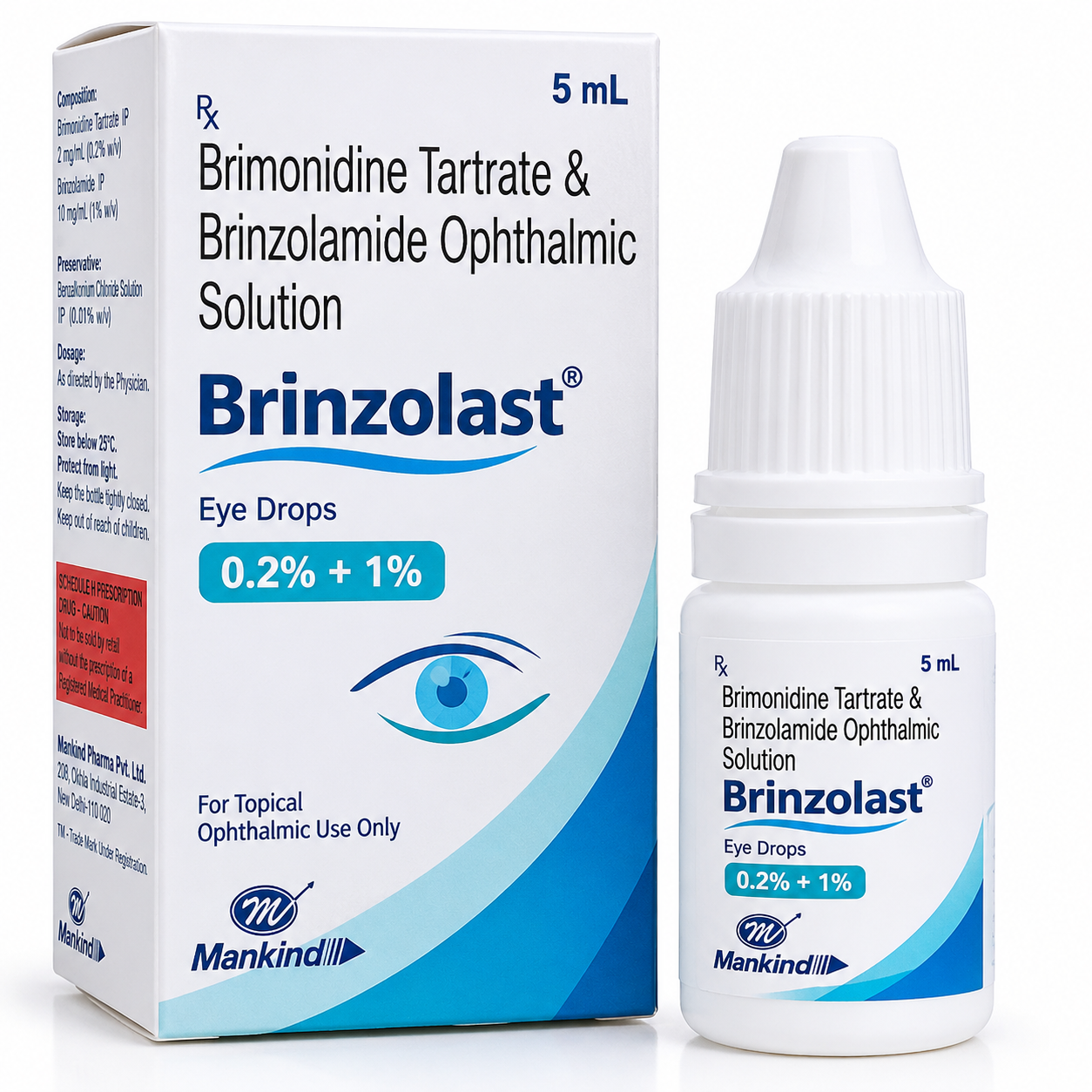


Brinzolast Eye Drops 5ML is a prescription eye medicine used to reduce raised pressure inside the eye. Doctors may prescribe it for conditions such as open-angle glaucoma and ocular hypertension. High pressure inside the eye can damage the optic nerve over time, so regular treatment and eye check-ups are important.
Brinzolast contains two active medicines: Brimonidine Tartrate 0.2% and Brinzolamide 1%. These medicines work through different actions to help lower the production of fluid inside the eye and reduce intraocular pressure.
Use Brinzolast only in the affected eye or eyes and exactly as prescribed by your ophthalmologist. Do not change the dose or stop treatment without medical advice.
Composition of Brinzolast Eye Drops
Each mL of Brinzolast Eye Drops contains:
- Brimonidine Tartrate 2 mg equivalent to 0.2% w/v
- Brinzolamide 10 mg equivalent to 1% w/v
The 5ML bottle provides an ophthalmic solution intended for use in the eyes. Always check the medicine label for the exact composition and instructions supplied with your pack.
What Are Brinzolast Eye Drops Used For?
Doctors mainly prescribe Brinzolast to help control increased pressure inside the eye. Its common uses include:
- Open-angle glaucoma
- Ocular hypertension
- Raised intraocular pressure
- Conditions where lowering eye pressure can help reduce the risk of optic nerve damage
Brinzolast does not cure glaucoma permanently. Instead, it helps control eye pressure when used regularly as directed by your doctor.
Benefits of Brinzolast Eye Drops
- Helps lower increased pressure inside the eye.
- Contains two medicines with complementary actions.
- Can help control eye pressure in open-angle glaucoma.
- Can help manage ocular hypertension.
- Regular treatment may help reduce the risk of pressure-related optic nerve damage.
How Brinzolast Eye Drops Work
Brinzolast combines brimonidine and brinzolamide. Brinzolamide belongs to the carbonic anhydrase inhibitor group. It reduces the production of aqueous humour, the fluid inside the eye, which helps lower eye pressure.
Brimonidine belongs to the alpha-adrenergic agonist group. It also reduces the production of fluid inside the eye and supports the reduction of intraocular pressure.
By using these two mechanisms together, Brinzolast can provide better control of raised eye pressure in suitable patients.
Who May Use Brinzolast Eye Drops?
Brinzolast may be prescribed for adults with raised intraocular pressure, open-angle glaucoma, or ocular hypertension. Your ophthalmologist will decide whether this combination is appropriate after checking your eye pressure and overall health.
Tell your doctor if you have kidney disease, heart or circulation problems, allergies to medicines, or if you use other eye drops or regular medicines.
How to Use Brinzolast Eye Drops
Use Brinzolast Eye Drops exactly according to your doctor’s instructions. A commonly listed regimen is one drop in the affected eye three times a day, but your doctor may adjust the schedule according to your eye pressure and treatment response.
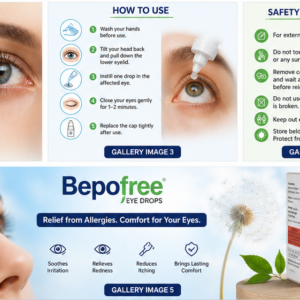
- Wash your hands properly before using the eye drops.
- Shake the bottle if the product label instructs you to do so.
- Tilt your head slightly backward.
- Gently pull down the lower eyelid to create a small pocket.
- Hold the bottle above the eye without touching the dropper tip to the eye or eyelids.
- Squeeze gently and place the prescribed number of drops into the eye.
- Close your eye for about 2 to 3 minutes.
- Apply gentle pressure near the inner corner of the eye if advised by your healthcare professional.
- Close the bottle tightly after use.
Keep the dropper tip clean and avoid touching it against your eye, fingers, skin, or other surfaces. This helps reduce the risk of contamination.
Brinzolast Eye Drops Dosage
The dosage depends on your condition, eye pressure, and response to treatment. Follow the dose and frequency prescribed by your ophthalmologist.
Do not use more drops than prescribed. Using extra drops does not necessarily improve the treatment and may increase the chance of unwanted effects.
What If You Miss a Dose?
If you forget a dose, use it when you remember. However, if your next dose is almost due, skip the missed dose and continue with your normal schedule. Do not use two doses together to make up for the missed dose.
Common Side Effects of Brinzolast Eye Drops
Some people may experience mild eye-related effects after using Brinzolast. Common effects may include:
- Temporary blurred vision
- Burning or stinging sensation
- Eye irritation
- Redness of the eye
- Dry eyes
- Itching or discomfort
- Unusual or bitter taste
- Headache
- Watery eyes
These effects may improve as your body adjusts to the medicine. However, contact your doctor if they become severe, persistent, or troublesome.
Serious Side Effects
Seek prompt medical attention if you develop severe eye pain, marked swelling, severe redness, skin rash, difficulty breathing, facial swelling, or other symptoms suggesting a serious allergic reaction.
Sudden or significant changes in vision also require medical assessment.
Precautions While Using Brinzolast
- Use Brinzolast only as prescribed by your eye specialist.
- Do not share your eye drops with another person.
- Avoid touching the dropper tip to the eye or surrounding skin.
- Tell your doctor if you have kidney disease.
- Inform your doctor about any medicine allergies.
- Tell your doctor about all other eye drops you use.
- Use caution while driving if your vision becomes blurred after applying the drops.
- Tell your doctor if you are pregnant, planning pregnancy, or breastfeeding.
Brinzolast and Contact Lenses
If you wear soft contact lenses, ask your doctor or pharmacist when you should remove and replace them. Brinzolamide eye drops may require a waiting period before contact lenses are put back in the eyes.
Drug Interactions
Tell your doctor about all prescription medicines, over-the-counter medicines, vitamins, supplements, and other eye preparations that you use.
Using several eye medicines together may require a specific time gap between applications. Your doctor or pharmacist can provide the correct schedule for each product.
Brimonidine may also require caution with medicines that can affect blood pressure, heart rate, or the central nervous system. Therefore, provide your complete medication list before starting treatment.
Brinzolast During Pregnancy and Breastfeeding
If you are pregnant, planning pregnancy, or breastfeeding, consult your doctor before using Brinzolast. Your doctor will consider the potential benefits and risks before recommending treatment.
Brinzolast for Children
Do not give Brinzolast to a child unless a qualified healthcare professional has specifically prescribed it. The safety of ophthalmic medicines can vary with age and medical condition.
Storage of Brinzolast Eye Drops
Store Brinzolast according to the storage instructions printed on your medicine pack. Current product listings state storage below 25°C. Keep the bottle away from excessive heat, moisture, and direct light, unless the product label provides different instructions.
Keep the bottle tightly closed and out of reach of children. Do not use the eye drops if the solution becomes damaged, contaminated, or otherwise unsuitable according to the product label.
Overdose of Brinzolast Eye Drops
Using more drops than prescribed can increase the chance of unwanted effects. If you accidentally use too much or swallow the medicine, contact your doctor or seek medical advice, especially if you develop dizziness, weakness, breathing difficulty, unusual sleepiness, or other concerning symptoms.
Important Tips for Using Brinzolast
- Use the drops at the same times each day when possible.
- Do not stop treatment suddenly unless your doctor tells you to stop.
- Keep regular appointments with your eye specialist.
- Get your eye pressure checked as recommended.
- Do not let anyone else use your bottle.
- Keep the dropper tip clean.
- Do not drive until temporary blurred vision has cleared.
- Tell your doctor about every other eye medicine you use.
Frequently Asked Questions About Brinzolast Eye Drops
1. What is Brinzolast Eye Drops used for?
Brinzolast is used to lower increased pressure inside the eye in conditions such as open-angle glaucoma and ocular hypertension.
2. What does Brinzolast contain?
Brinzolast contains Brimonidine Tartrate 0.2% and Brinzolamide 1%.
3. Is Brinzolast a prescription medicine?
Yes. Brinzolast Eye Drops are listed as a prescription medicine and should be used under medical guidance.
4. How often should I use Brinzolast?
The frequency depends on your doctor’s prescription. A commonly listed regimen is one drop three times daily.
5. Can Brinzolast cure glaucoma?
No. Brinzolast helps control eye pressure but does not permanently cure glaucoma. Continue treatment as advised by your eye specialist.
6. Can Brinzolast cause blurred vision?
Yes. Temporary blurred vision can occur after using eye drops. Avoid driving until your vision becomes clear.Conclusion
Brinzolast Eye Drops 5ML combines brimonidine and brinzolamide to help lower raised pressure inside the eye. It is mainly used for open-angle glaucoma and ocular hypertension. Because these conditions can affect vision, regular eye examinations and correct medicine use are important.
Use Brinzolast only according to your ophthalmologist’s instructions. Do not change the dose, stop treatment, or combine it with other eye medicines without professional advice.
Product Information
- Brand: Brinzolast
- Product: Brinzolast Eye Drops 5ML
- Composition: Brimonidine Tartrate 0.2% + Brinzolamide 1%
- Manufacturer/Marketer: Mankind Pharma Pvt Ltd
- Dosage Form: Ophthalmic Eye Drops
- Pack Size: 5ML
- Therapeutic Class: Antiglaucoma Agents
- Prescription: Required
- Country of Origin: India
Useful Links
Internal Links:
External Medical References:
- MedlinePlus – Brinzolamide Ophthalmic
- MedlinePlus – Brimonidine Ophthalmic
- Apollo Pharmacy – Brinzolast Eye Drops 5ML
- Mankind Pharma – Product Information