

























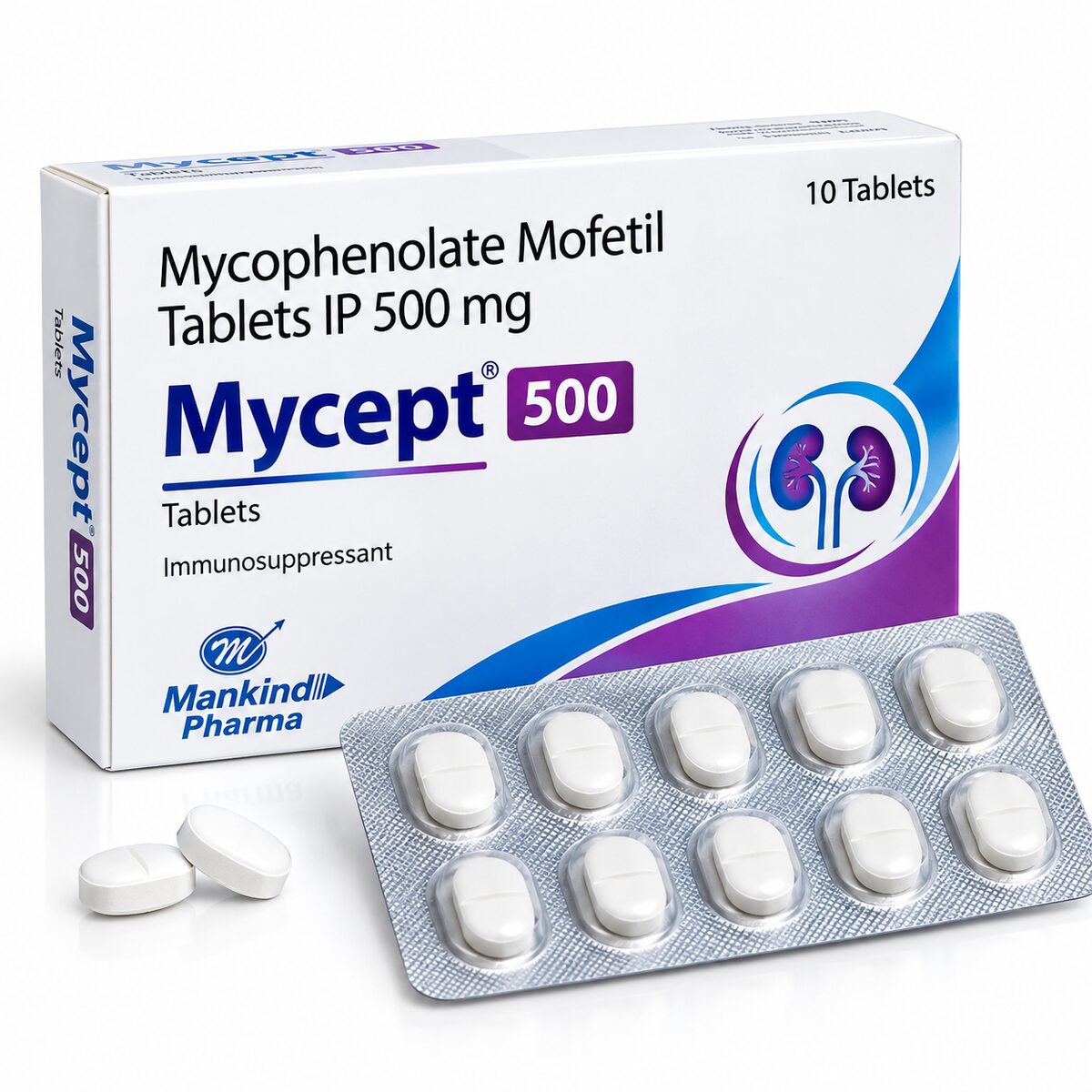


Mycept 500 Tablet contains Mycophenolate Mofetil 500 mg, an immunosuppressant medicine. Doctors commonly prescribe it with other immunosuppressive medicines to help prevent organ rejection after kidney, heart, or liver transplantation. It reduces certain immune-system activities that can cause the body to attack a transplanted organ.
Because this medicine suppresses the immune system, doctors carefully monitor patients during treatment. Therefore, use Mycept 500 Tablet only under the supervision of a qualified healthcare professional.
Composition of Mycept 500 Tablet
- Active Ingredient: Mycophenolate Mofetil
- Strength: 500 mg
- Brand: Mycept
- Dosage Form: Tablet
- Route: Oral
- Pack Size: 10 tablets
- Marketer: Mankind Pharma Ltd.
- Prescription: Required
- Country of Origin: India
Current Indian medicine listings identify Mycept 500 Tablet as a prescription medicine containing Mycophenolate Mofetil 500 mg. :contentReference[oaicite:2]{index=2}
Uses of Mycept 500 Tablet
Doctors primarily use Mycept 500 Tablet to help prevent rejection of a transplanted organ. It may form part of a treatment plan after:
- Kidney transplantation
- Heart transplantation
- Liver transplantation
Official mycophenolate mofetil prescribing information supports its use for prevention of organ rejection in kidney, heart, and liver transplant recipients in combination with other immunosuppressive medicines. :contentReference[oaicite:3]{index=3}
How Mycept 500 Tablet Works
Mycophenolate mofetil suppresses certain immune cells that help drive the body’s immune response. As a result, it reduces the immune activity that can attack a transplanted organ.
This action helps protect the transplanted organ when doctors use the medicine as part of an appropriate immunosuppressive treatment plan.
Benefits of Mycept 500 Tablet
- Helps reduce the risk of organ rejection after transplantation.
- Supports long-term management after certain kidney, heart, or liver transplants.
- Suppresses specific immune-system activity involved in organ rejection.
- Works as part of a combination immunosuppressive treatment plan.
However, the medicine also lowers immune activity. Therefore, patients need regular medical follow-up during treatment.
Who May Need Mycept 500 Tablet?
Doctors may prescribe this medicine to patients who have received a suitable organ transplant. The doctor selects the dose and combination of medicines according to the type of transplant, medical history, laboratory results, and response to treatment.
Do not start Mycept 500 Tablet on your own. Also, do not stop it suddenly unless your transplant specialist or another qualified healthcare professional tells you to do so.
Take Mycept 500 Tablet exactly as your doctor prescribes. Swallow the tablet whole with water. Do not crush, chew, or break it unless your doctor specifically instructs you to do so.
Current Indian medicine information advises taking mycophenolate mofetil on an empty stomach, generally at least 1 hour before or 2 hours after food, unless your doctor gives different instructions. Maintain the same schedule each day to help keep medicine levels consistent. :contentReference[oaicite:4]{index=4}
Mycept 500 Tablet Dosage
The correct dose depends on factors such as the type of organ transplant, other medicines, kidney or liver function, blood-test results, and your doctor’s treatment plan.
Therefore, do not use the 500 mg strength to decide your personal dose. Your doctor may prescribe different amounts or dosing schedules according to your individual needs.
Never increase, reduce, or stop the dose without medical advice.
Missed Dose
If you miss a dose, contact your doctor or transplant-care team for instructions. Do not take a double dose unless your healthcare professional specifically tells you to do so.
Common Side Effects
Mycophenolate mofetil can cause side effects. Some commonly reported problems include:
- Diarrhea
- Nausea
- Vomiting
- Abdominal discomfort or pain
- Headache
- Fatigue
- Increased risk of infections
Because the medicine suppresses immune activity, infections can become more serious. Contact your doctor promptly if you develop fever, persistent cough, painful urination, unusual weakness, or other signs of infection. :contentReference[oaicite:5]{index=5}
Important Precautions
- Use this medicine only under medical supervision.
- Attend all scheduled blood tests and medical appointments.
- Tell your doctor if you develop fever or other signs of infection.
- Report unusual bruising or bleeding.
- Tell your doctor about all medicines and supplements you take.
- Protect your skin from excessive sunlight and UV exposure.
- Discuss vaccination plans with your healthcare professional.
Mycophenolate mofetil can increase susceptibility to serious infections and can also increase the risk of certain malignancies, particularly skin cancers. Therefore, regular medical monitoring remains important. :contentReference[oaicite:6]{index=6}
Pregnancy and Mycept 500 Tablet
Mycophenolate mofetil can seriously affect pregnancy. It has been associated with an increased risk of first-trimester pregnancy loss and congenital malformations. Women who can become pregnant should discuss pregnancy prevention and planning with their doctor before and during treatment.
If you are pregnant, planning pregnancy, or think you may be pregnant, contact your doctor immediately. Do not stop the medicine on your own because transplant medicines require careful medical management. :contentReference[oaicite:7]{index=7}
Breastfeeding
Discuss breastfeeding with your doctor before taking Mycept 500 Tablet. Your healthcare professional can assess your treatment and advise you about the safest approach.
Drug Interactions
Mycophenolate mofetil can interact with other medicines. Therefore, give your doctor a complete list of prescription medicines, over-the-counter products, vitamins, and supplements you use.
Some medicines can change mycophenolate exposure or affect treatment safety. Your doctor may adjust treatment or monitor you more closely when necessary.
Overdose
Do not take more Mycept 500 Tablet than your doctor prescribed. If you accidentally take an extra dose, contact your healthcare professional or seek medical advice promptly.
Storage Information
Store Mycept 500 Tablet below 30°C and keep it away from excessive heat and moisture. Keep the medicine in its original packaging and out of reach of children. :contentReference[oaicite:8]{index=8}
Frequently Asked Questions About Mycept 500 Tablet
1. What is Mycept 500 Tablet?
Mycept 500 Tablet contains Mycophenolate Mofetil 500 mg. It is an immunosuppressant that doctors use with other medicines to help prevent organ rejection after transplantation.
2. What is Mycept 500 Tablet used for?
Doctors primarily use it to help prevent rejection of transplanted kidneys, hearts, or livers.
3. Is Mycept 500 Tablet a prescription medicine?
Yes. Current Indian pharmacy listings identify Mycept 500 Tablet as a prescription medicine. :contentReference[oaicite:9]{index=9}
4. What is the composition of Mycept 500 Tablet?
Each tablet contains Mycophenolate Mofetil 500 mg.
5. How does Mycept 500 work?
It suppresses certain immune-system activities. This action helps reduce the immune response that can attack a transplanted organ.
Important Safety Information
Mycept 500 Tablet contains Mycophenolate Mofetil, a potent immunosuppressant. It can increase the risk of serious infections, certain malignancies, and blood-related problems. It also carries important pregnancy-related risks.
Therefore, take this medicine only as prescribed. Keep your medical appointments, complete recommended blood tests, and report fever, unusual bleeding, severe diarrhea, persistent cough, or other concerning symptoms to your doctor.
Also, protect your skin from excessive sunlight and UV exposure because immunosuppressive treatment can increase the risk of certain skin cancers. :contentReference[oaicite:14]{index=14}
Conclusion
Mycept 500 Tablet contains Mycophenolate Mofetil 500 mg and belongs to the immunosuppressant group. Doctors mainly use it with other medicines to help prevent organ rejection after kidney, heart, or liver transplantation.
Because this medicine strongly affects the immune system, careful medical supervision is essential. Follow your prescribed schedule, attend regular check-ups, and never change the dose or stop treatment without consulting your doctor.