


















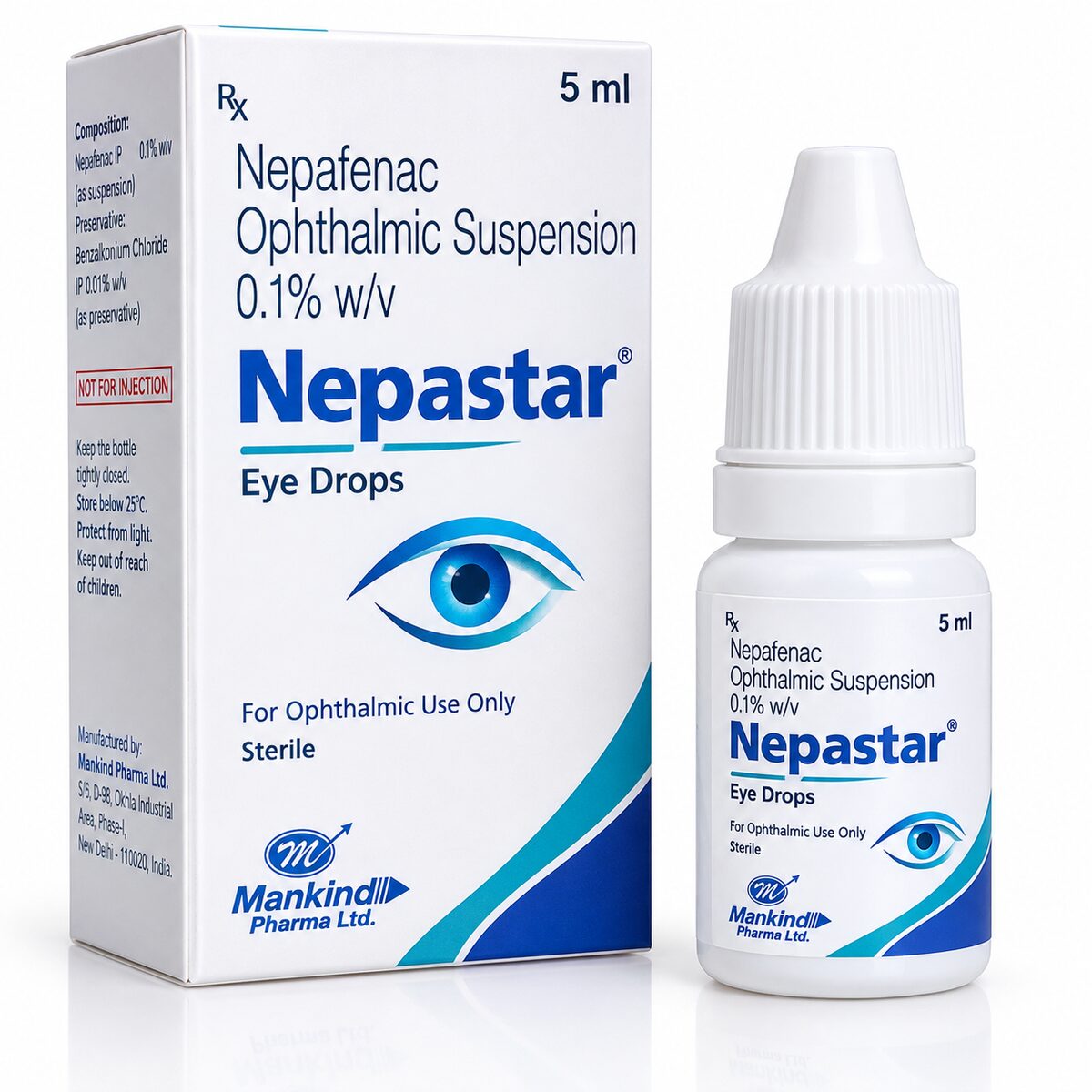
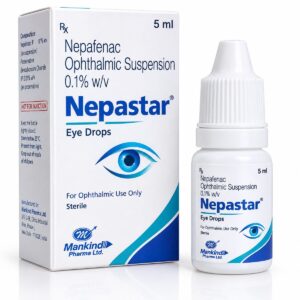
Nepastar Eye Drops 5ML contains Nepafenac 0.1% w/v and is a prescription ophthalmic medicine. It belongs to the non-steroidal anti-inflammatory drug (NSAID) group. Doctors mainly prescribe it to manage eye pain and inflammation after cataract surgery.
In addition, Nepafenac helps reduce substances that contribute to inflammation and pain. As a result, the medicine can help control postoperative eye discomfort when used as directed by an ophthalmologist.
Composition of Nepastar Eye Drops
- Active Ingredient: Nepafenac 0.1% w/v
- Dosage Form: Ophthalmic Suspension
- Pack Size: 5 ML
- Route: Ophthalmic use
Uses of Nepastar Eye Drops 5ML
Nepastar may be prescribed for specific eye-related conditions, particularly after cataract surgery. Therefore, use the medicine only according to your ophthalmologist’s instructions.
- Helps manage eye pain after cataract surgery
- Helps reduce postoperative eye inflammation
- Supports relief from eye discomfort during recovery
- Helps manage inflammation when prescribed by an eye specialist
Benefits of Nepastar Eye Drops
Nepastar can help control inflammation and discomfort in the eye. Moreover, its ophthalmic formulation delivers the medicine directly to the affected eye.
- Helps reduce eye inflammation
- Helps manage postoperative eye pain
- Supports a more comfortable recovery after cataract surgery
- Works locally after application to the eye
How Nepastar Works
Nepafenac reduces the activity of enzymes involved in prostaglandin production. Since prostaglandins contribute to pain and inflammation, reducing their production can help control these symptoms in the eye.
Who May Need Nepastar Eye Drops?
An ophthalmologist may prescribe Nepastar to patients who need treatment for eye pain or inflammation following cataract surgery. However, the medicine is not suitable for every type of eye problem, so an examination and medical advice are important.
How to Use Nepastar Eye Drops 5ML
First, wash your hands before applying the drops. Next, tilt your head back and gently pull down the lower eyelid. Then, place the prescribed number of drops into the affected eye without touching the dropper tip to your eye or skin.
- Wash your hands before use.
- Shake the bottle gently if instructed on the label.
- Tilt your head back and pull down the lower eyelid.
- Apply the prescribed number of drops.
- Close your eye gently after application.
- Keep the dropper tip clean and avoid touching it.
- Close the bottle tightly after use.
Follow the exact schedule provided by your ophthalmologist. Do not increase the number of drops or change the treatment duration on your own.
Nepastar Eye Drops Dosage
The dosage and duration depend on your eye condition and treatment plan. Therefore, follow the prescription provided by your ophthalmologist rather than changing the dose yourself.
Missed Dose
If you forget a dose, use it when you remember. However, if your next dose is due soon, skip the missed dose and continue with the regular schedule. Do not apply extra drops to compensate.
Common Side Effects of Nepastar
Some patients may experience temporary eye-related effects after using Nepastar. These effects can include:
- Blurred vision
- Eye discomfort
- Eye irritation
- Eye itching
- Redness or watering
Usually, mild effects may settle with continued treatment. Nevertheless, contact your doctor if symptoms become severe, persistent or unusual.
Precautions and Safety Information
- Use Nepastar only in the eyes.
- Do not swallow the medicine.
- Keep the dropper tip away from your eye and other surfaces.
- Tell your doctor if you have diabetes or dry eye.
- Inform your ophthalmologist about other eye conditions.
- Tell your doctor if you take blood-thinning medicines.
- Follow your doctor’s advice about contact lens use.
Pregnancy and Breastfeeding
If you are pregnant, planning pregnancy or breastfeeding, speak with your doctor before using Nepastar. Your doctor can assess whether the medicine is appropriate for you.
Driving and Using Machines
Temporary blurred vision may occur after applying eye drops. Therefore, wait until your vision becomes clear before driving or operating machinery.
Drug Interactions
Tell your doctor about all medicines and eye drops that you currently use. In particular, mention blood-thinning medicines and other ophthalmic treatments so your doctor can assess possible interactions.
Overdose
Using extra drops does not provide faster relief. If you accidentally use too much medicine or swallow the solution, seek medical advice.
Storage Information
Store Nepastar according to the instructions printed on the package. Keep the bottle tightly closed and protect it from unsuitable storage conditions. Also, keep the medicine out of children’s reach.
Frequently Asked Questions About Nepastar
1. What is Nepastar Eye Drops 5ML used for?
Nepastar is mainly prescribed to manage eye pain and inflammation after cataract surgery.
2. What does Nepastar contain?
The active ingredient is Nepafenac 0.1% w/v.
3. Is Nepastar a prescription medicine?
Yes. Use Nepastar under the guidance of an ophthalmologist.
4. Can Nepastar treat general eye redness?
No. Avoid using prescription eye drops for unexplained redness unless your doctor recommends them.
5. Can Nepastar help with eye pain?
Yes. It can help manage pain associated with inflammation after cataract surger
Important Safety Information
- Use Nepastar only as prescribed.
- For ophthalmic use only.
- Do not share your eye drops with another person.
- Keep the dropper clean.
- Avoid touching the dropper tip.
- Contact your doctor if you develop severe pain, worsening redness or vision changes.
Conclusion
Nepastar Eye Drops 5ML contains Nepafenac 0.1% w/v and is mainly prescribed to manage eye pain and inflammation after cataract surgery. When used correctly, it can support postoperative eye care under the supervision of an ophthalmologist.
Always follow the prescribed dose and treatment duration. Additionally, attend your recommended follow-up appointments and report unusual or worsening eye symptoms promptly.