

























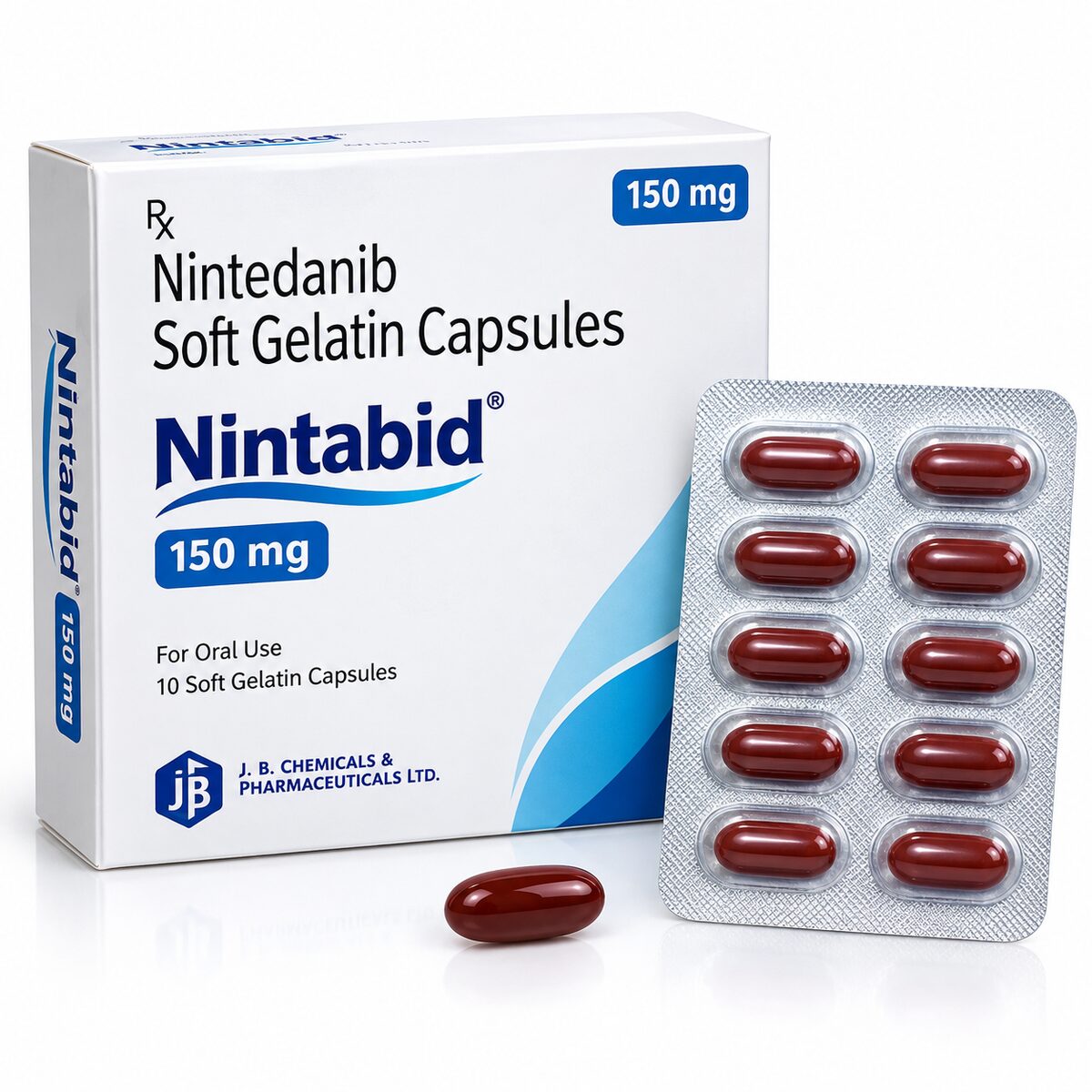

Nintabid 150mg Soft Gelatin Capsule is a prescription medicine that contains Nintedanib 150mg. Doctors prescribe nintedanib for certain chronic lung conditions in which lung tissue becomes scarred and lung function gradually declines.
Nintabid 150mg Capsule may be prescribed for idiopathic pulmonary fibrosis (IPF) and certain chronic fibrosing interstitial lung diseases with a progressive pattern. Depending on the approved indication and treatment plan, nintedanib may also be used in selected adults with non-small cell lung cancer.
This medicine helps slow disease progression. It does not remove existing lung scars or provide a permanent cure for pulmonary fibrosis.
Composition of Nintabid 150mg Capsule
- Active Ingredient: Nintedanib 150mg
- Dosage Form: Soft Gelatin Capsule
- Strength: 150mg
- Pack Size: 10 Soft Gelatin Capsules
Nintedanib belongs to a group of medicines called kinase inhibitors. The medicine blocks certain signalling pathways involved in fibrosis and abnormal cell growth.
What Is Nintabid 150mg Capsule Used For?
Your doctor may prescribe Nintabid for conditions where nintedanib is appropriate, including:
- Idiopathic pulmonary fibrosis (IPF)
- Chronic fibrosing interstitial lung diseases with a progressive phenotype
- Systemic sclerosis-associated interstitial lung disease (SSc-ILD)
- Selected non-small cell lung cancer treatment plans, according to the approved indication and doctor’s advice
Nintedanib is designed to slow the decline in lung function in appropriate patients. It should be used under regular medical supervision.
Benefits of Nintabid 150mg Capsule
- Helps slow the progression of certain fibrosing lung diseases.
- May help slow the decline in lung function in suitable patients.
- Targets signalling pathways involved in fibrosis.
- Can form part of a specialist treatment plan for selected lung conditions.
How Nintabid 150mg Capsule Works
Nintabid contains nintedanib, which blocks several tyrosine kinases involved in pathways that promote fibrosis and abnormal cell growth.
In pulmonary fibrosis, excessive tissue repair can cause scar tissue to build up in the lungs. This scarring can make lung tissue stiff and reduce lung function. By blocking specific signalling pathways, nintedanib helps slow this process.
Nintabid does not reverse established lung scarring. Instead, treatment aims to slow further disease progression in appropriate patients.
Who Should Use Nintabid 150mg Capsule?
Nintabid should only be used by patients for whom a doctor has prescribed nintedanib. Your doctor will consider your diagnosis, liver function, other medicines, bleeding risk, and overall health before starting treatment.
Do not start Nintabid on your own. It is a prescription medicine and requires medical monitoring.
How to Take Nintabid 150mg Capsule
Take Nintabid exactly as prescribed by your doctor. The usual recommended adult dose for nintedanib in IPF and certain progressive fibrosing ILDs is 150mg twice daily, approximately 12 hours apart, with food. However, your doctor may change the dose based on your condition, side effects, liver function, and treatment response.
- Take the capsule with food.
- Take each dose at approximately the same time every day.
- Swallow the capsule whole with liquid.
- Do not chew, crush, or open the soft gelatin capsule.
- Follow the exact dose prescribed by your doctor.
Do not change the dose yourself. Your doctor may temporarily reduce the dose or stop treatment if certain side effects occur.
Nintabid 150mg Capsule Dosage
The correct dose depends on your medical condition and response to treatment. For many adult patients receiving nintedanib for IPF or certain progressive fibrosing ILDs, the recommended dose is 150mg twice daily with food.
Patients with mild liver impairment may require a lower dose. Nintedanib is generally not recommended in moderate or severe hepatic impairment. Your doctor may also adjust treatment if significant side effects occur.
Common Side Effects of Nintabid 150mg Capsule
Nintabid may cause side effects. Commonly reported effects include:
- Diarrhea
- Nausea
- Vomiting
- Abdominal pain
- Reduced appetite
- Weight loss
- Headache
- Increased liver enzymes
- High blood pressure
- Tiredness
Diarrhea is one of the common side effects associated with nintedanib. Drink enough fluids and contact your doctor if diarrhea becomes severe, persistent, or difficult to control.
Serious Side Effects and Warnings
Nintedanib can cause serious side effects in some patients. Contact your doctor promptly if you experience unusual bleeding or bruising, severe abdominal symptoms, chest pain, breathing difficulty, or signs of liver problems.
Signs of possible liver injury can include yellowing of the skin or eyes, dark urine, pain in the upper right side of the abdomen, unusual tiredness, or loss of appetite.
Nintedanib can also increase the risk of bleeding and gastrointestinal complications in some patients. Tell your doctor if you have a history of bleeding, blood clots, diverticular disease, or recent abdominal surgery.
Precautions Before Taking Nintabid
- Tell your doctor if you have liver disease.
- Inform your doctor about kidney problems.
- Tell your doctor if you have a history of bleeding.
- Inform your doctor about heart disease or blood clots.
- Tell your doctor about any recent abdominal surgery.
- Provide a complete list of your medicines and supplements.
- Tell your doctor if you are pregnant or planning pregnancy.
- Do not breastfeed unless your doctor confirms that it is appropriate.
Nintabid 150mg and Liver Health
Nintedanib can increase liver enzymes and may cause liver injury. Doctors may perform liver function tests before and during treatment.
Tell your healthcare professional immediately if you notice yellow skin or eyes, dark urine, unusual tiredness, loss of appetite, or pain in the upper right side of your abdomen.
Nintabid 150mg During Pregnancy
Nintedanib can harm an unborn baby. Women who can become pregnant should discuss effective contraception with their doctor before and during treatment.
Tell your doctor immediately if you become pregnant while taking Nintabid. Do not start or continue treatment during pregnancy unless your specialist specifically advises you to do so.
Nintabid 150mg and Breastfeeding
Breastfeeding is generally not recommended during nintedanib treatment because of the potential risk to the infant. Discuss your options with your doctor before using this medicine while breastfeeding.
Nintabid 150mg Drug Interactions
Several medicines can affect nintedanib levels in the body. Tell your doctor about all prescription medicines, over-the-counter medicines, vitamins, and herbal products you use.
Medicines such as certain strong P-glycoprotein or CYP3A4 inhibitors or inducers may affect nintedanib exposure. Your doctor may need to monitor you or change your treatment.
Do not start medicines such as rifampicin, phenytoin, carbamazepine, or St. John’s wort without discussing them with your healthcare professional.
What to Do If You Miss a Nintabid Dose?
If you miss a dose, skip the missed dose and take your next dose at the regular time. Do not take two doses together to make up for a missed dose.
Nintabid 150mg Capsule Overdose
Do not take more Nintabid than prescribed. Taking extra doses can increase the risk of side effects. If you accidentally take more than the prescribed amount, contact your doctor or seek urgent medical advice.
Storage of Nintabid 150mg Capsule
Store Nintabid according to the instructions on the product packaging. Current Indian product listings recommend storing it below 25°C. Keep the capsules in their original container and protect them from excessive heat and moisture.
Keep Nintabid out of reach of children. Do not use capsules that are damaged or appear unsuitable for use.
Important Tips While Taking Nintabid
- Take the capsule with food.
- Take doses at approximately the same time every day.
- Swallow the capsule whole.
- Do not crush, chew, or open the capsule.
- Drink enough fluids if diarrhea occurs.
- Attend all scheduled liver function tests.
- Tell your doctor about unusual bleeding or bruising.
- Report severe abdominal pain or persistent diarrhea.
- Tell your doctor about all medicines and supplements you use.
- Do not stop treatment without medical advice.
Frequently Asked Questions About Nintabid 150mg Capsule
1. What is Nintabid 150mg Capsule?
Nintabid 150mg is a prescription soft gelatin capsule containing nintedanib 150mg.
2. What is Nintabid 150mg used for?
It is used for certain fibrosing lung diseases, including idiopathic pulmonary fibrosis and selected progressive interstitial lung diseases. Some approved treatment plans also use nintedanib for selected non-small cell lung cancer cases.
3. What is the generic name of Nintabid?
The generic name is Nintedanib.
4. How should Nintabid 150mg be taken?
Take it with food and swallow the capsule whole with liquid. Follow the exact schedule prescribed by your doctor.
5. Can Nintabid be taken without food?
Nintedanib is generally taken with food. Follow your doctor’s instructions and take each dose consistently.
Conclusion
Nintabid 150mg Soft Gelatin Capsule contains nintedanib and is used under specialist medical supervision for certain progressive lung diseases. It works by blocking signalling pathways involved in fibrosis and can help slow the decline in lung function in appropriate patients.
Because Nintabid can affect the liver and may cause other significant side effects, regular medical monitoring is important. Take it exactly as prescribed and report persistent diarrhea, unusual bleeding, severe abdominal symptoms, or signs of liver problems to your doctor.
Product Information
- Product Name: Nintabid 150mg Soft Gelatin Capsule
- Generic Name: Nintedanib 150mg
- Brand: Nintabid
- Manufacturer/Marketer: J B Chemicals & Pharmaceuticals Ltd.
- Dosage Form: Soft Gelatin Capsule
- Strength: 150mg
- Pack Size: 10 Soft Gelatin Capsules
- Route: Oral
- Prescription: Required
- Country of Origin: India
- Therapeutic Class: Antineoplastic / Tyrosine Kinase Inhibitor
Useful Links
Internal Links:
External Medical References:
- MedlinePlus – Nintedanib
- DailyMed – Nintedanib Capsule Information
- CDSCO – Nintedanib Prescribing Information