


































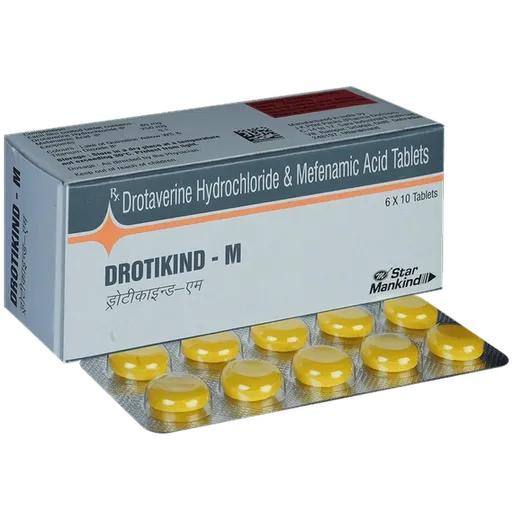


Drotikind M Tablet: Overview
Drotikind M Tablet is a prescription medicine containing a combination of Drotaverine Hydrochloride and Mefenamic Acid. It is commonly used to help relieve pain and cramps associated with smooth-muscle spasms. The combination provides antispasmodic and pain-relieving action, making it useful when abdominal discomfort is accompanied by cramping.
Drotaverine helps relax the muscles of the abdomen and other internal organs, while Mefenamic Acid belongs to the non-steroidal anti-inflammatory drug (NSAID) group and helps reduce pain and inflammation. This medicine should be used only in the dose and duration recommended by a healthcare professional.
Composition
- Drotaverine Hydrochloride – an antispasmodic medicine that helps relax smooth muscles.
- Mefenamic Acid – an NSAID that helps relieve pain and inflammation.
Uses of Drotikind M
This medicine may be prescribed for painful conditions associated with muscle spasms. Depending on the patient’s condition, a doctor may recommend it for:
- Abdominal cramps and spasmodic pain
- Pain associated with smooth-muscle spasms
- Menstrual cramps and period-related pain
- Other painful conditions where an antispasmodic and analgesic combination is considered appropriate
How Drotikind M Works
The two active ingredients work through different but complementary mechanisms. Drotaverine Hydrochloride helps relax contracted smooth muscles, which can reduce spasms and cramping. Mefenamic Acid helps reduce the production of substances involved in pain and inflammation.
By addressing both muscle spasms and pain, the combination can provide relief when cramping is an important part of the symptoms.
Key Benefits
- Helps relieve pain associated with muscle spasms.
- Helps relax smooth muscles and reduce cramping.
- May provide relief from menstrual cramps when prescribed for this purpose.
- Combines antispasmodic and pain-relieving actions in one medicine.
Important Information
Take this medicine exactly as prescribed by your doctor. Do not increase the dose or continue treatment for longer than recommended. Mefenamic Acid may cause stomach-related side effects in some people and may not be suitable for patients with certain stomach, kidney, liver, heart, or bleeding problems.
Before starting treatment, inform your doctor about any other medicines you are taking, especially other NSAID painkillers, blood thinners, or medicines that may affect the kidneys or stomach.
For general information about medicines and safe medication use, you can also visit the NHS.
Possible Side Effects
Like other medicines, this combination may cause side effects in some people. Most effects are mild and may improve as the body adjusts to treatment. Contact your doctor if any symptom is severe, persistent, or unusual.
- Nausea or vomiting
- Indigestion or stomach discomfort
- Diarrhoea or constipation
- Dizziness or headache
- Stomach pain or heartburn
- Skin rash or itching
Seek prompt medical attention if you develop signs of a serious allergic reaction, unusual bleeding, severe stomach pain, breathing difficulty, swelling, or other concerning symptoms.
Dosage and How to Take
The dose depends on your age, symptoms, medical history, and response to treatment. Take the medicine only in the dose prescribed by your doctor.
- Swallow the tablet with water.
- Do not crush or chew it unless specifically advised.
- Taking it after food may help reduce stomach discomfort.
- Do not take more than the prescribed amount.
- Avoid prolonged self-medication with pain-relieving medicines.
Who Should Use It With Caution?
Tell your doctor before treatment if you have a history of stomach ulcers, gastrointestinal bleeding, kidney disease, liver problems, heart disease, high blood pressure, asthma triggered by painkillers, or an allergy to NSAID medicines.
Older adults may require additional monitoring because they can be more susceptible to stomach, kidney, and cardiovascular side effects.
Drug Interactions
Some medicines can interact with the ingredients in this combination and may increase the risk of side effects or change how treatment works. Inform your doctor about all prescription medicines, over-the-counter products, and supplements you use.
- Other NSAID painkillers
- Aspirin and certain blood-thinning medicines
- Corticosteroids
- Some medicines used for high blood pressure
- Medicines that may affect kidney function
- Certain medicines that can increase the risk of bleeding
Precautions
- Use only under medical supervision.
- Avoid taking additional NSAID painkillers unless your doctor recommends them.
- Tell your doctor about any history of stomach bleeding or ulcers.
- Inform your doctor if you are pregnant, planning pregnancy, or breastfeeding.
- Do not drive or operate machinery if you experience dizziness.
- Keep the medicine away from children.
Missed Dose
If you forget a scheduled dose, take it when you remember unless it is almost time for the next dose. If the next dose is near, skip the missed dose and continue with your normal schedule. Do not double the dose to make up for the missed one.
Overdose
Taking more than the prescribed amount may increase the risk of unwanted effects, particularly stomach and other NSAID-related problems. If an overdose is suspected, seek immediate medical advice rather than taking another dose.
Storage
- Store at room temperature in a dry place.
- Protect the tablets from excessive heat and moisture.
- Keep the medicine in its original packaging until use.
- Keep out of reach and sight of children.
-
Patient Guidance
Use this medicine exactly according to your healthcare professional’s instructions. It is intended for short-term symptom relief when prescribed appropriately. Do not share your medicine with another person, even if they have similar symptoms.
If pain continues, becomes severe, or repeatedly returns, consult a healthcare professional instead of continuing self-treatment.
Frequently Asked Questions
1. What is Drotikind M Tablet used for?
It is used to help relieve painful conditions associated with smooth-muscle spasms, including certain types of abdominal and menstrual cramps.
2. What are the ingredients in this medicine?
It contains Drotaverine Hydrochloride and Mefenamic Acid as its active ingredients.
3. How does this combination work?
Drotaverine helps relax smooth muscles, while Mefenamic Acid helps reduce pain and inflammation.
4. Can it be taken for period pain?
A doctor may prescribe this combination for menstrual cramps when appropriate for the individual patient.
5. Should it be taken with food?
Following your doctor’s instructions is most important. Taking an NSAID-containing medicine with or after food may help reduce stomach irritation.
Conclusion
Drotikind M Tablet combines an antispasmodic ingredient with an NSAID pain reliever to help manage pain associated with muscle spasms. Because Mefenamic Acid can cause important gastrointestinal and other medicine-related risks in some people, treatment should follow professional medical advice.
For safe use, follow the prescribed dose, avoid unnecessary combination with other painkillers, and inform your doctor about existing medical conditions and other medicines. If symptoms persist or become severe, seek medical evaluation rather than continuing self-treatment.
For additional general information about medicines and their safe use, visit NHS.
Related Information